News release
From:
The Lancet
The Lancet: A greater focus on men’s health could improve pregnancy outcomes and child development, experts argue
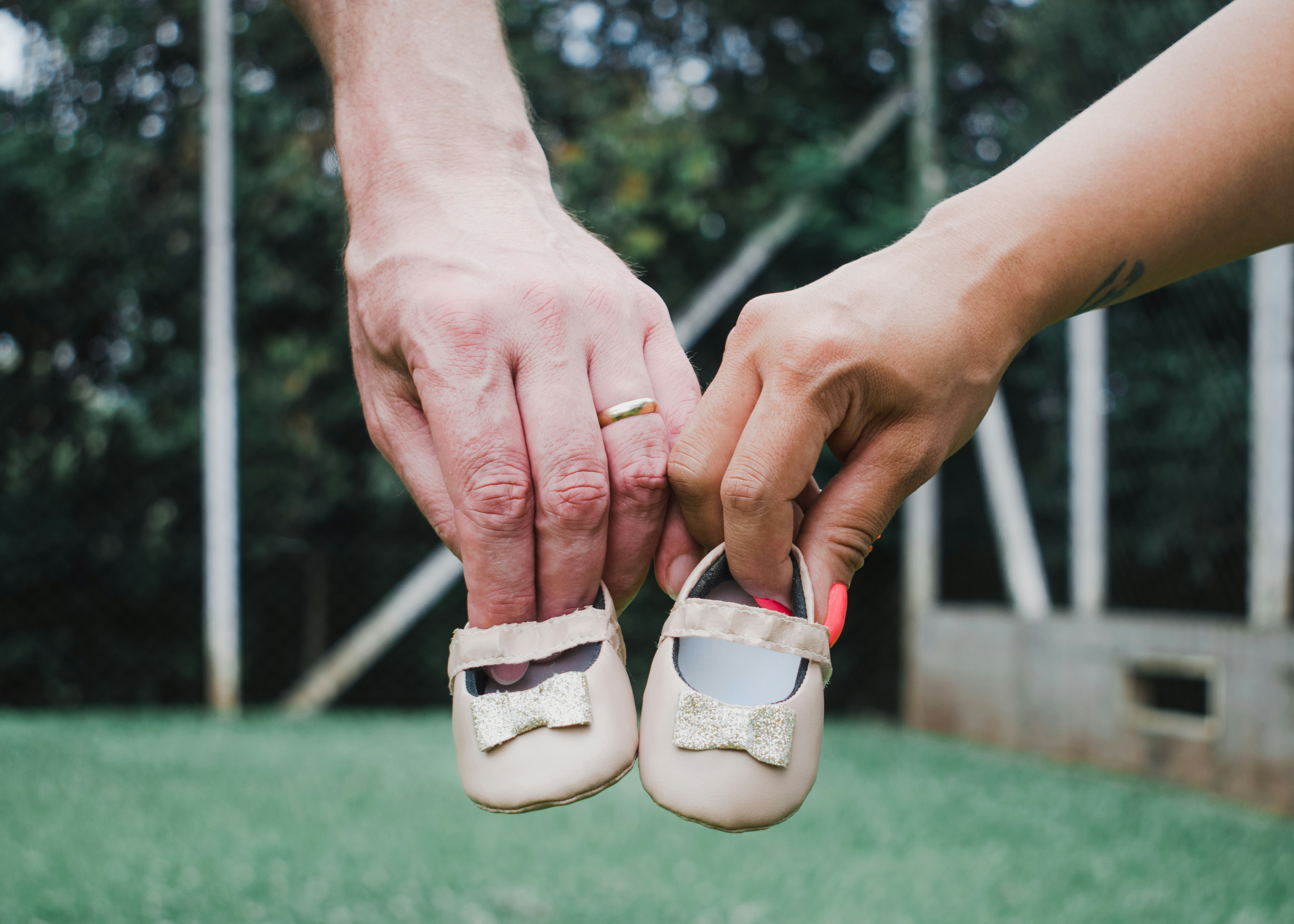
Male partners play a major role in the health of pregnant mothers and babies, and this is currently overlooked by policies and society, argue a group of international researchers in a Review, published in The Lancet.
The Review summaries evidence that various factors during a man’s life can influence their health and wellbeing around the time they become a father, and lead to important influences on the health of mother and child.
Global sperm counts have declined by over 50% from 1973 to 2018, with the rate of decline accelerating in the 21st century [1]. Studies highlighted in the Review suggest that factors including smoking, obesity, high blood pressure, high consumption of alcohol, age and some mental health disorders may alter sperm, which may influence pregnancy outcomes and child’s health. Authors say there should be greater awareness of how the lifestyle choices of young men can influence fertility and the health of their future children.
Beyond sperm, men can also influence child health by their parenting and interactions with the mother, both before and after having a child. Practical help and emotional support from partners are linked to healthier pregnancies and mothers, leading to healthier children. Fathers’ parenting also impacts child health, with some outcomes, such as preschool child weight, being influenced more by fathers than mothers. [2]
The review discusses the role of men’s mental health in relationship quality and coparenting dynamics, highlighting that childhood adverse experiences are a common contributor to poor mental health which can be exacerbated during the transition to parenthood. Authors call for more support for boys and young men’s mental health before they become fathers.
Additionally, there is early but growing evidence that expectant and new fathers experience hormonal and brain changes which are associated with higher parenting sensitivity and engagement. In Filipino men, fathers showed greater decreases in salivary testosterone than childless men, and those who grew up with engaged, supportive fathers had even lower salivary testosterone. [3] Authors say this is further evidence that men's health and environment can impact their engagement and caring behaviours.
The authors call for more awareness and support from society – such as strengthening paternity leave and not restricting government parental benefits to mothers - to enable a more equitable role for fathers in child health.
A linked paper on tracking changes in health before pregnancy over time across different countries using an agreed set of indicators will publish at the same time.
1. https://pubmed.ncbi.nlm.nih.gov/36377604/
2. https://pubmed.ncbi.nlm.nih.gov/18055667/
3. https://pubmed.ncbi.nlm.nih.gov/35639692/
Journal/
conference:
The Lancet
Organisation/s:
Koi Tū: the Centre for Informed Futures, Monash University, University of Hawai‘i, Hawai'i; Duke-NUS Medical School, Singapore; University of Southampton, UK.
Funder:
For Huang et al. (paper 1): JYH, MZLK, and GSKC were supported by the Singapore Biomedical Research Council (Health and Human Potential Seed Grant H22P0M0009). JYH is supported by the US National Institutes for Health (grant numbers 2U54MD007601 and L60HD119875) and Health Resources and Services Administration (5-UE7-MC26282-10). FML is supported by the Wright Family Foundation. KKS is supported by the Wellcome Trust (218495/Z/19/Z). KMG is supported by the UK Medical Research Council (MC_UU_12011/4), the National Institute for Health and Care Research (NIHR; NIHR Senior Investigator [NF-SI-0515–10042] and NIHR Southampton Biomedical Research Centre [NIHR203319]), and Alzheimer’s Research UK (ARUK-PG2022A-008). DS is supported by the NIHR through an NIHR Advanced Fellowship (NIHR302955) and the NIHR Southampton Biomedical Research Centre (NIHR203319). No funding was set aside for the writing of this manuscript and funding agencies had no oversight over the content or decision to submit the manuscript. All other authors declare no competing interests.
For Schoenaker et al. (paper 2): WVN is supported as the Public Health Agency of Canada Chair in Family Planning Public Health Research (CIHR CPP-329455; 2014–2024) and as a Tier 1 Canada Research Chair in Family Planning Innovation (CRC-2023-00135; 2024–2032). WVN received payment as consultant expert witness from the Ontario Government, Office of the Attorney General, and reports roles on the Board of Directors with the Society of Family Planning (2016–2021) and International Federation of Abortion and Contraception Professionals (FIAPAC; 2024–2027). GC reports support from the European Research Council under the European Union’s Horizon 2020 research and innovation programme (grant agreement number 819752 DEVORHBIOSHIP – ERC-2018-COG) and the Leverhulme Trust under the Leverhulme Trust Prize. DS is supported by the National Institute for Health and Care Research (NIHR) through an NIHR Advanced Fellowship (NIHR302955) and the NIHR Southampton Biomedical Research Centre (NIHR203319). Data collection on public perspectives in Singapore was supported by the KKH Health Services Model of Care Transformation Fund (MoCTF) grant (MoCTF/01/2020, MoCTF/02/2020, and MoCTF/03/2020) and the Lien Foundation Optimising Maternal and Child Health Programme Fund. CWK and JKYC are supported by the National Medical Research
Council, Ministry of Health, Singapore (NMRC/MOH-000596-00 [CWK] and NMRC/CSA-SI-008-2016, MOH-001266-01, MOH-001221-01, and MOH-000932-01 [JKYC]). Data collection on public perspectives in the UK was supported by a UCL Global Engagement Funds award to JS, DS, and JH. All other authors declare no competing interests. The views expressed in this paper are those of the authors and not necessarily those of the funders. The funders had no role or involvement in the content of this paper, including recruitment, data collection, analysis and interpretation. The authors were not precluded from accessing data presented in this paper, and they accept responsibility to submit for publication.
 Sign In



 Australia; New Zealand; International