Human breast milk not uniquely special, seal study shows

Publicly released:
International
P. Pomeroy SMRU
P. Pomeroy SMRU

New research suggests human milk isn't unique in the complexity of its sugars, which are crucial to infant health. Scientists studied milk from five wild Atlantic grey seals over the few weeks they were feeding their pups, finding that, as in humans, its composition changes during the feeding period to match the needs of the infant. They also found hundreds of different sugar molecules, of which half had structures never documented before—and several of these had antimicrobial properties or helped regulate the immune system, making them potentially useful for biomedical research.

Media release

From: Springer Nature

Atlantic grey seal milk rivals human breast milk in sugar complexity, suggests research published in Nature Communications. These findings challenge the previously held assumption that human milk is uniquely complex amongst mammals.

Milk oligosaccharides are a type of sugar that contribute to infant development and health in all mammals. These sugars have critical roles including protection from pathogens, cultivating the initial microbiome, and promoting intestinal tract development. Despite their importance, there are gaps in our knowledge of milk sugar diversity in animals other than humans, mainly because there have been a limited number of studies involving other mammals.

Daniel Bojar and colleagues analyze milk samples from five wild Atlantic grey seals throughout their roughly 17-day nursing period. They discover 332 different sugar molecules and structurally characterise 240. Of these 240, approximately two-thirds (166) had not been previously documented. Some of these molecules reached a size of 28 sugar units, up to 10 units more than the largest known human milk sugars. The authors reveal that the sugar composition of seal milk undergoes coordinated changes throughout the lactation period to fit the changing needs of the infant, similar to the changes seen in human milk. It is also demonstrated that several of these newly discovered sugars possess antimicrobial and immunomodulatory properties, with potential applications in the biomedical sciences.

This study potentially challenges our understanding of mammalian milk evolution, overturning long-held assumptions that human milk is uniquely sophisticated among mammals. The research may also open promising avenues for discovering bioactive compounds with potential applications in infant nutrition, infection control, and immune system support.

Multimedia
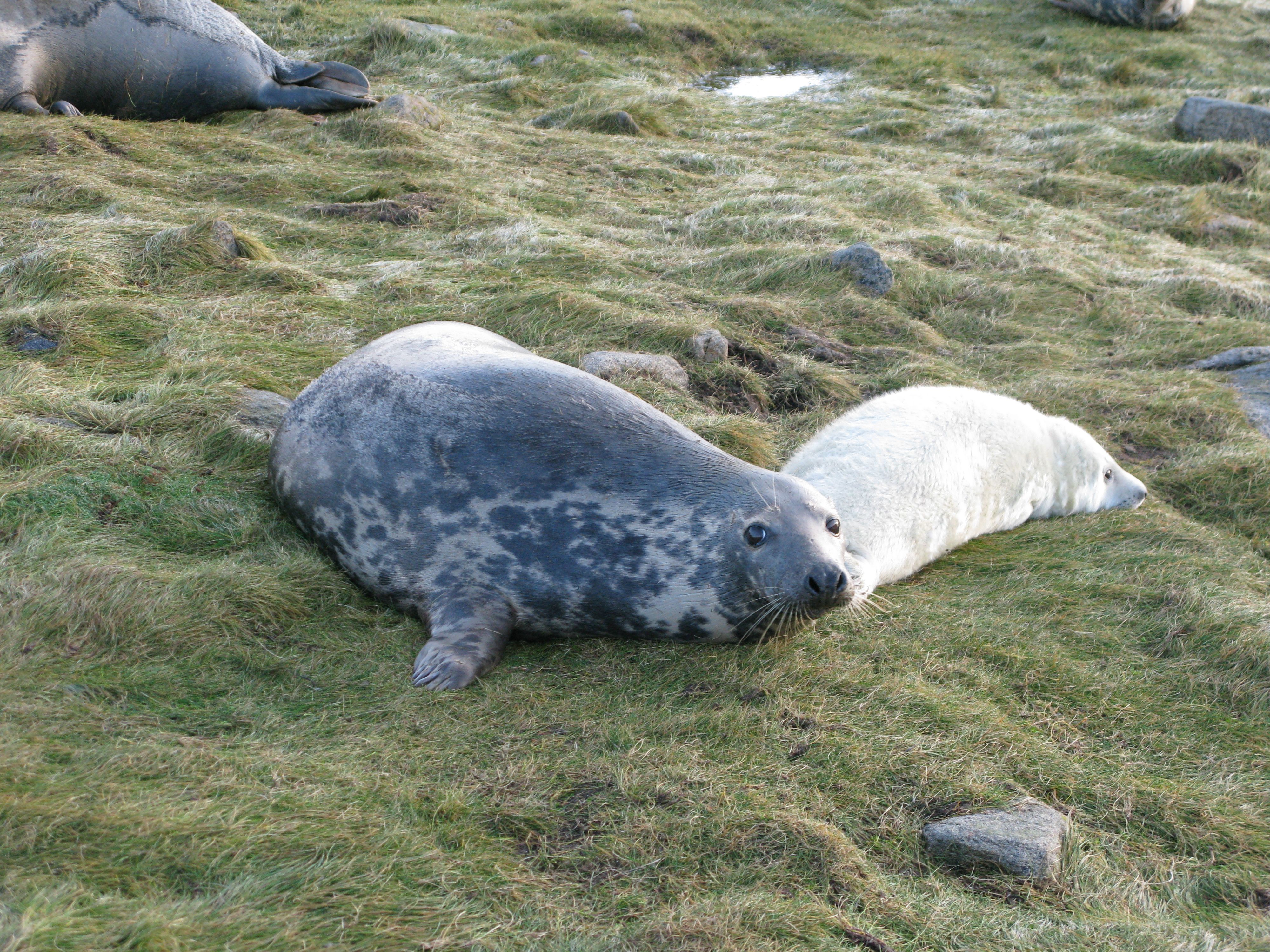
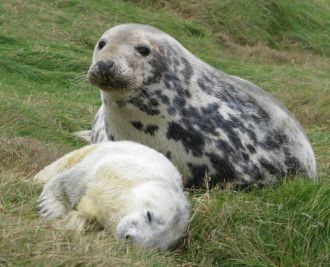
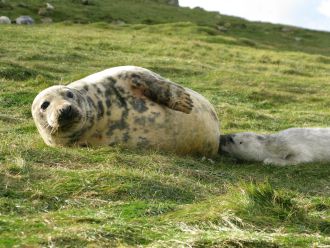
Grey seal mother and pup on the Isle of May, Scotland
Grey seal mother nursing a pup on the Isle of May, Scotland

Attachments

Note: Not all attachments are visible to the general public. Research URLs will go live after the embargo ends.

Research Springer Nature, Web page Please link to the article in online versions of your report (the URL will go live after the embargo ends)
Journal/
conference:
Nature Communications
Research:Paper
Organisation/s: University of Gothenburg (Sweden)
Funder: This work was supported by a Branco Weiss Fellowship – Society in Science awarded to D.B.; by the Knut and Alice Wallenberg Foundation; the Hasselblad Foundation; and the University of Gothenburg, Sweden. C.C. and R.H. gratefully acknowledge support from the Swiss National Science Foundation (project 320030-231409) and the University of Basel, Switzerland. We thank SciLifeLab and BioMS (Swedish research council) for providing financial support to the Pro- teomics Core Facility, Sahlgrenska Academy. K-H.K. was supported by Academia Sinica grant AS-IR-113-L04. We thank the Academia Sinica Common Mass Spectrometry Facilities for Proteomics and Protein Modification Analysis funded by the Academia Sinica Core Facility and Innovative Instrument Project grant AS-CFII-108-107, for MS data col- lection. Sample collection from mother seals on the Isle of May was funded from core support given to the Sea Mammal Research Unit, Scottish Oceans Institute, from the Natural Environmental Research Council (United Kingdom). The funders had no role in study design, data collection and analysis, decision to publish or preparation of the manuscript.
Media Contact/s
Contact details are only visible to registered journalists.