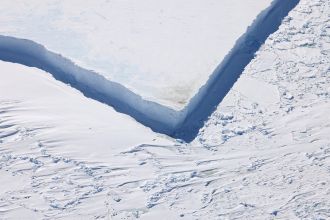
How an iceberg may have stopped emperor penguins breeding on Coulman Island in 2025

Publicly released:
International
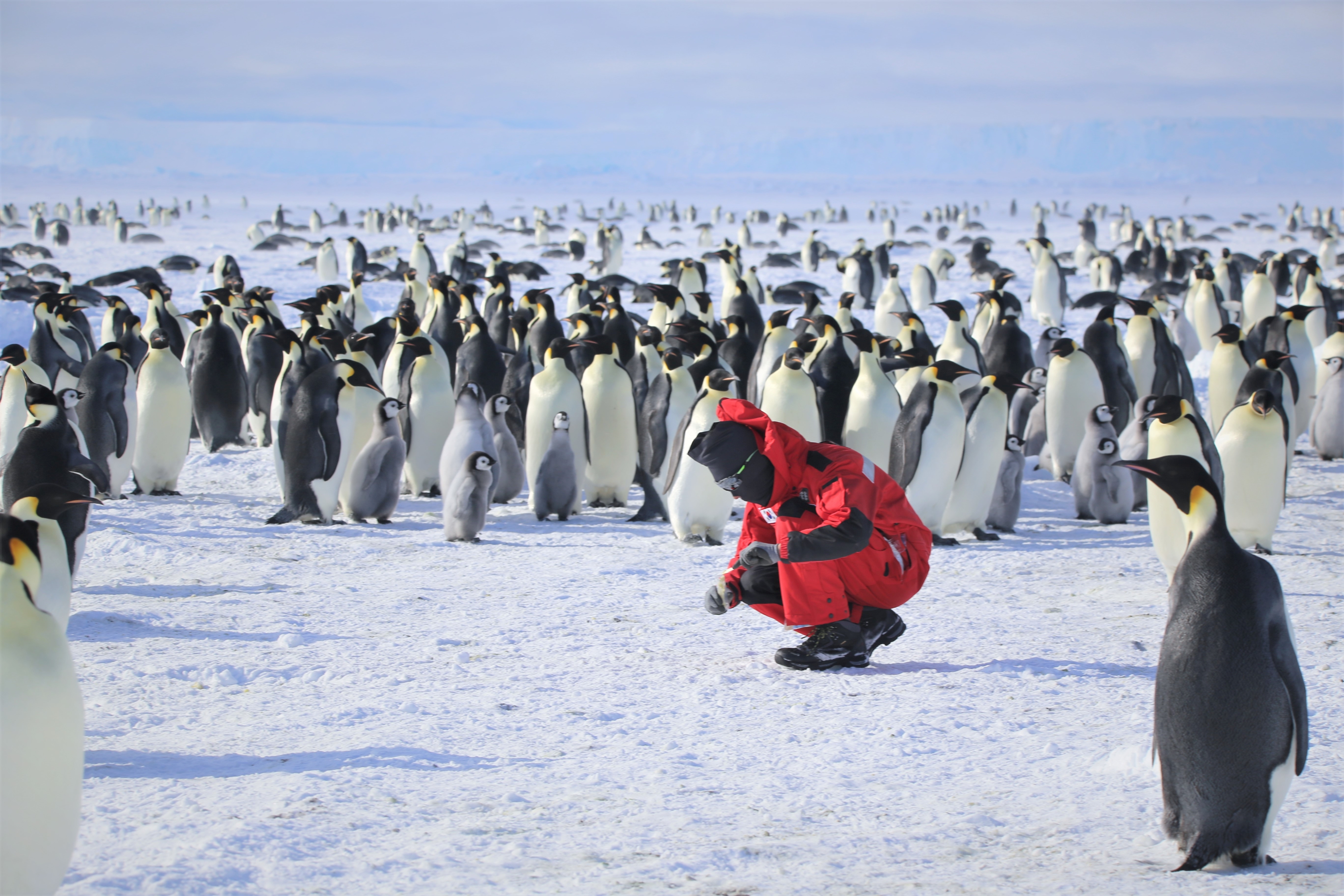
A researcher collecting guano samples at the Coulman Island emperor penguin breeding colony during the 2025 field survey. Credit: Myeongho Seo

The number of chicks in the Coulman Island emperor penguin colony decreased by around 69% in 2025 compared with 2024, according to international researchers, who say a huge iceberg grounded off the island during this time, making it harder for the penguins to reach their food. The researchers conducted two aerial field surveys of the colony during 2025 and counted 6,658 live chicks, which is 69% fewer than they counted in 2024 and on average between 2017 and 2024. During field observations, the authors observed a large iceberg grounded 3–5 km north of the colony, and satellite imagery showed that it arrived during the hatching season. They suggest that the iceberg’s steep southern face and its grounded position likely increased the distance penguins needed to travel to forage from around 9.3 km in 2024 to approximately 14.9 km in 2025, which they say likely reduced their breeding success in 2025.

News release

From: Springer Nature

Ecology: Grounded iceberg coincided with major reduction in emperor penguin breeding success

The number of chicks in the Coulman Island emperor penguin colony decreased by around 69% in 2025 compared with 2024, according to research published in Communications Earth & Environment. The authors suggest that a large iceberg, which grounded off the island between July 2025 and January 2026, likely restricted the colony’s access to important foraging areas, demonstrating that individual iceberg movements may affect breeding success even when overall sea ice conditions appear favourable.

During the breeding season (between June and January), emperor penguins (Aptenodytes forsteri) require both stable sea ice and reliable access to open water food sources so that adults can feed their unfledged chicks. Overall sea ice conditions are known to affect breeding success, but previous observations have suggested that individual large icebergs may also have an effect.

Jeong-Hoon Kim and colleagues conducted two aerial field surveys of the emperor penguin colony on Coulman Island, Antarctica, in November and December 2025. They counted 6,658 live chicks — approximately 69% fewer than both the 2024 count and the 2017–2024 mean count.

During field observations, the authors observed a large iceberg grounded 3–5 km north of the colony. Satellite imagery showed that this iceberg (about 13.9 km long and 4.0 km wide) had calved in March 2025, approached the colony in July, and finally grounded on 28 July, during the hatching season. The authors combined the iceberg’s positional data with a detailed model of its shape, derived from aerial imagery collected during the survey. They suggest that the iceberg’s steep southern face and its grounded position likely increased the distance penguins needed to travel to forage from around 9.3 km in 2024 to approximately 14.9 km in 2025. They propose that this increased distance contributed to the reduced breeding success in 2025.

The authors note that the study only covers a single season and that the findings are observational. However, they also suggest that while such iceberg events are unpredictable and typically temporary, future research into emperor penguin breeding should consider the role these events can play alongside broader trends.

Multimedia
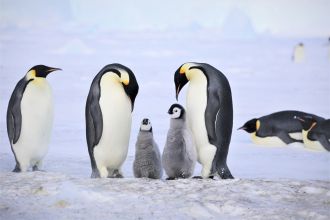
Emperor penguins with their chicks.
Researcher collecting guano samples
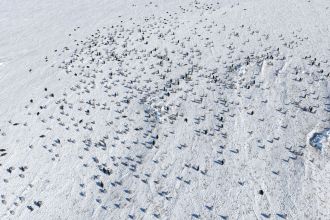
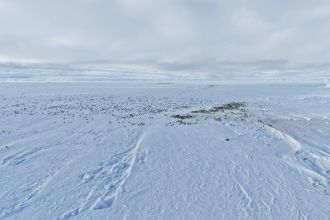
Aerial view of the Coulman Island colony, photographed from a helicopter.
Aerial view of the Coulman Island colony, photographed with a UAV.
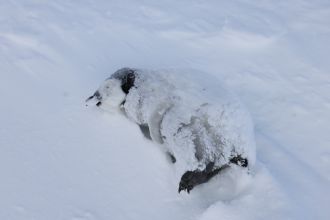
The corpse of an emperor penguin chick on Coulman Island.
Researchers working in the Coulman Island colony.
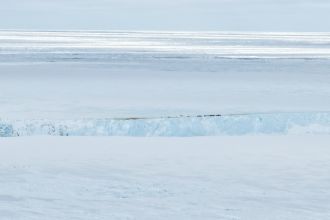
Emperor penguins gathered at the top of the iceberg “cliff”
A line of emperor penguins moving toward the sea
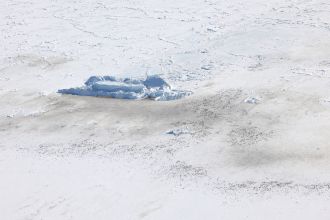
Guano traces left by emperor penguins on top of the iceberg “cliff”.
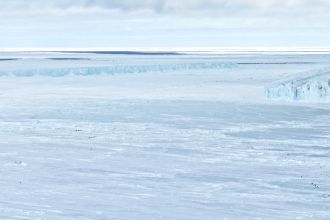
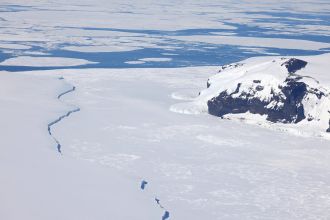
Coulman Island on the right, with the grounded iceberg on the left.
Journal/
conference:
Communications Earth & Environment
Research:Paper
Organisation/s: Korea Polar Research Institute, Korea
Funder: This work was supported by Korea Institute of Marine Science & Technology Promotion(KIMST) grant funded by the Ministry of Oceans and Fisheries(KIMST RS-2022-KS221661).
Media Contact/s
Contact details are only visible to registered journalists.