
Our lack of giant insects may not be thanks to our air's oxygen levels

Publicly released:
Australia; New Zealand; International; SA
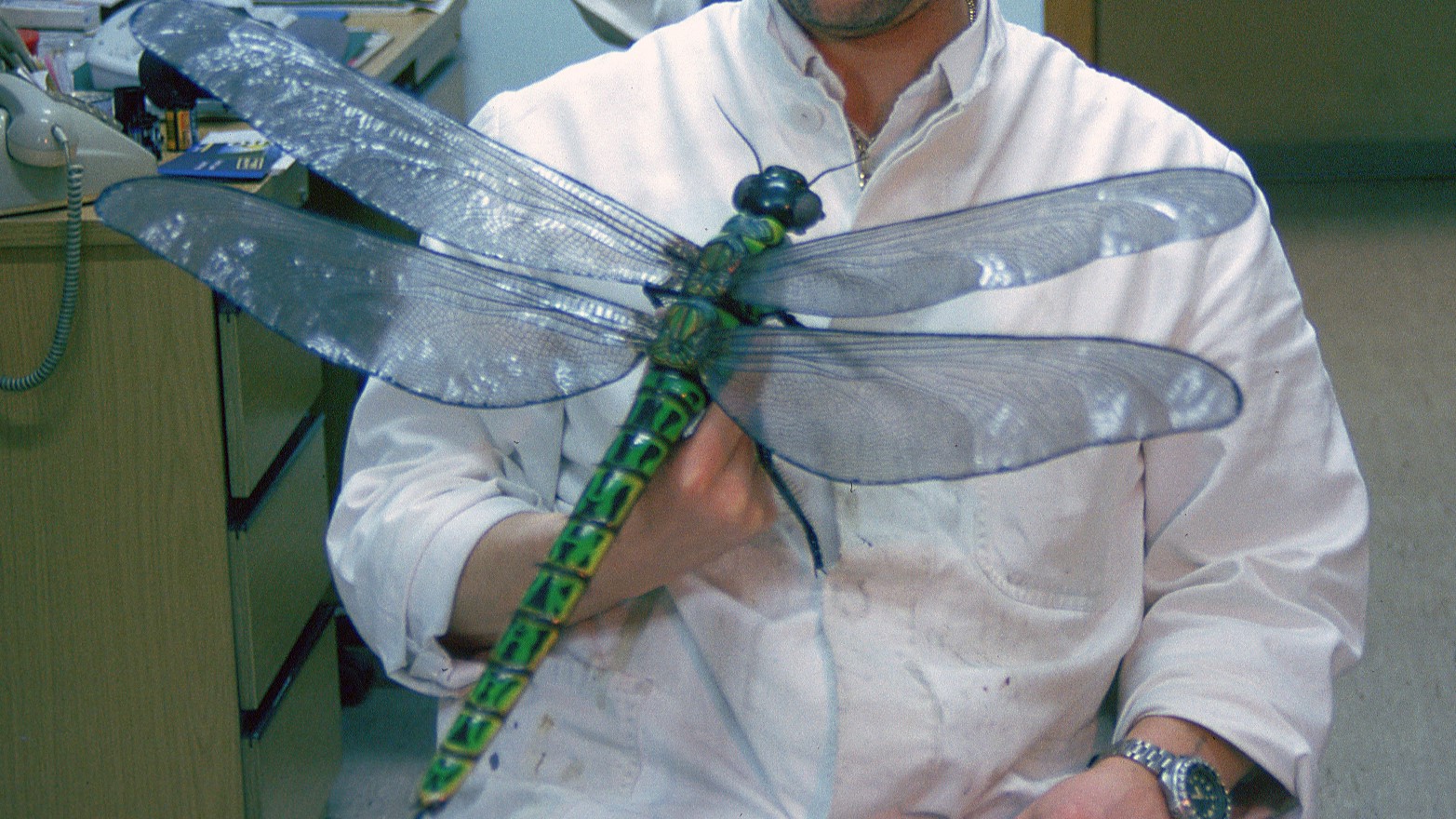
Meganeuropsis drogonfly model: Credit: Werner Kraus, CC BY-SA 4.0 <https://creativecommons.org/licenses/by-sa/4.0>, via Wikimedia Commons

The lack of giant insects in the world today is probably not due to limits on their ability to absorb and move oxygen around their bodies, according to international and Australian research. The idea that oxygen levels have dictated the maximum body size of insects is part of popular and scientific literature. Around 30 years ago, it was suggested that the structure of an insect's respiratory system, in which oxygen is transported along air-filled tubes into tissues, limits their size, but now, researchers have found that even when insects increased their size by 10,000 times, the size of these air-filled tubes only increased by 1.8 times.  They say that even in an extinct dragonfly which had a 70cm wingspan, these tubes only take up around 1% of the space of an insect, and something else may be stopping insects from becoming giants.

Attachments

Note: Not all attachments are visible to the general public. Research URLs will go live after the embargo ends.

Research Springer Nature, Web page Please link to the article in online versions of your report (the URL will go live after the embargo ends).
Journal/
conference:
Nature
Research:Paper
Organisation/s: University of Auckland, Adelaide University, University of Pretoria, South Africa
Funder: This research was supported by the National Research Foundation of South Africa (grant numbers 136166 and 129756)
Media Contact/s
Contact details are only visible to registered journalists.