Sign In



 Australia; Pacific; NSW; QLD
News release
From:
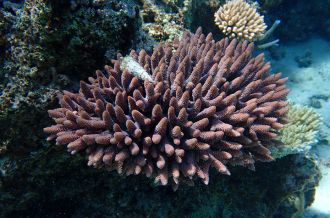
The offspring of a common coral branching species set up a new home up to 100 kilometres or more from their parents in one of the longest dispersal distances ever measured, according to new international research.
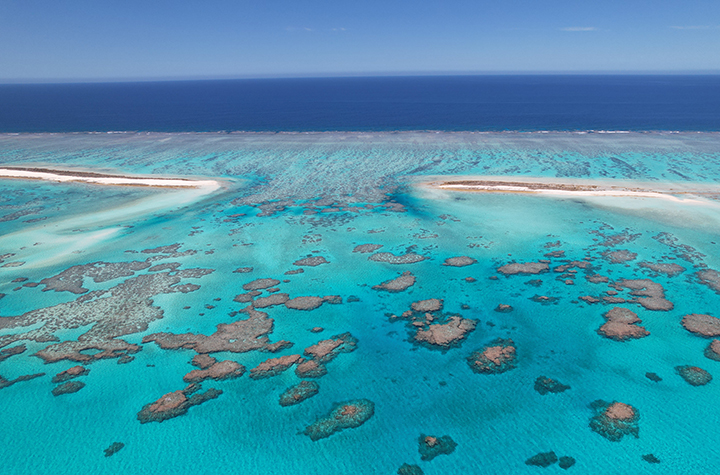
Led by Southern Cross University and the French National Centre for Scientific Research and published today in the journal Current Biology, the paper shows, for the first time, the connectivity between the broadcast-spawning coral populations of the Great Barrier Reef, Coral Sea atolls and New Caledonia in the Western Pacific.
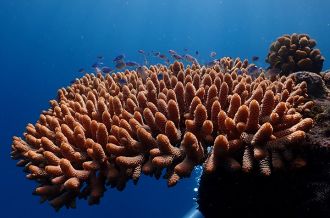
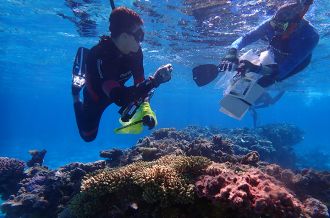
The Australian and French researchers sampled more than 1,000 corals and 29 reef sites to discover the branching coral Acropora spathulata forms large, interconnected breeding populations. Its spawn hitches a ride on ocean currents to disperse widely.
The findings underscore the importance of considering diversity and connectivity in management interventions, and the need for conservation networks that extend beyond national borders.
“On average, coral parents and their offspring are separated by about 100 kilometres. This wide dispersal can help populations recover after disturbances such as marine heatwaves, crown-of-thorns starfish outbreaks or cyclones,” said lead researcher Dr Hugo Denis of Southern Cross University and Sorbonne Université who completed the study for his PhD research.
“This also allows populations from Australia and New Caledonia – separated by thousands of kilometres – to occasionally exchange gametes and genetic variants, distinct ‘tools’ shaped over thousands of years that can help other populations to adapt to their own changing environmental conditions.”
In reef-building corals, the diversity of the genetic toolbox comes from both the coral animal and the photosynthetic algal symbionts living in its tissues.
The research team found that Acropora spathulata hosts five distinct algal taxa depending on environmental conditions, which may provide additional pathways to adaptation.
“As marine heatwaves become more common, coral reefs can only survive if coral populations can adapt to cope with warmer waters and can recover after parts of the reef die,” said Dr Denis.
“Genetic diversity is the fuel for adaptation; like a shared toolbox in a community: the greater the variety of tools, the better it can build new things, fix problems and respond to changing conditions.”
The secret journey of baby corals
Connectivity – the movement of individuals or gametes through the open ocean –determines how quickly reefs can be repopulated after die-off events, and how much populations can share and exchange their genetic ‘tools’ (variants) for adaptation.
Yet the extent of genetic diversity within reefs and connectivity among reefs is unknown for most coral populations.
Senior co-author on the paper Professor Cynthia Riginos, from the Australian Institute of Marine Science (AIMS) and the University of Queensland, said uncovering long distance connections among reefs is only possible when studies are able to sample distant populations such as those from New Caledonia, the Coral Sea and the Great Barrier Reef.
“This is what makes Hugo’s study unusual and important. Sampling across this geographical extent is rare,” she said.
"This work also adds to our understanding of how microalgal symbionts are distributed across coral colonies on the reef. It is much more about the environmental conditions the symbionts find themselves in than it is for the coral host species."
Multimedia