 Sign In



 International
News release
From:
As the saying goes, there are plenty more fish in the sea – but climate change is rapidly challenging that notion, with fish stocks around the world under threat.
New modelling from Monash University predicts how climate change will alter fishing yields in many regions, threatening food security, livelihoods and the future of marine life as a sustainable food source.
Existing prediction models have looked at how fish species respond to warming temperatures in the absence of evolutionary change. However, research published today in Science now looks at how fish will evolve in response to future climates.
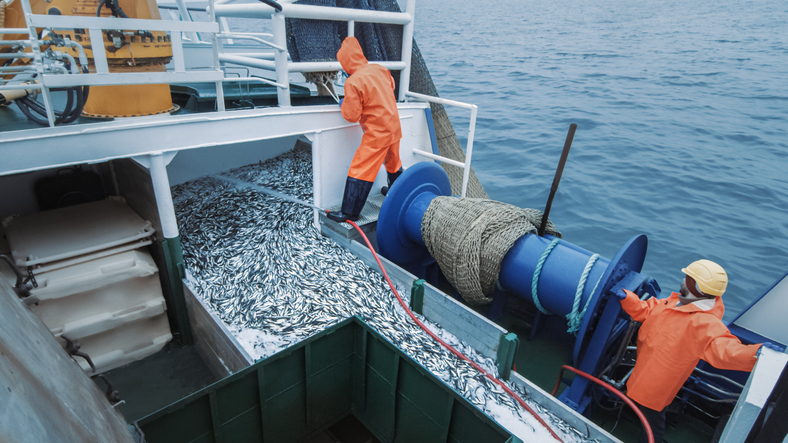
Fisheries provide billions of people with animal protein, for which the demand is predicted to increase. But as oceans warm and weather patterns shift, fish are evolving, breeding less or disappearing from waters entirely.
Researchers from Monash found that evolutionary responses to global change are likely to reduce the sustainability of fisheries and have negative consequences for global fisheries yields.
Professor Craig White, Head of the School of Biological Sciences, said he predicts that global warming will cause fish to grow faster but to mature earlier, decreasing their maximum size.
“This evolution is good for fish but bad for fisheries. Evolution negates the impacts of global warming on fish fitness but exacerbates the impact on sustainable harvests,” said Professor White.
“Every degree of warming is predicted to decrease fisheries production; however, a good climate policy that limits global warming to ~1.5 °C has the potential to preserve millions of tonnes of fisheries production that would otherwise be lost.”
The study, undertaken in collaboration with Professor Jan Kozłowski from Jagiellonian University in Poland, implemented a new life-history model that was tested using data on nearly 3,000 fish species and predicted how life-history evolution will alter sustainable harvests in 43 of the world’s largest fisheries.
Professor Dustin Marshall, Head of the Marine Evolutionary Ecology Research Group at Monash University, said that consideration of evolution is critical for predicting how climate change will impact the ecosystem services that humans rely on.
“Most projections assume that evolution will mitigate the impacts of climate change. While that is true for the persistence of species, the opposite can be the case for ecosystem services,” said Professor Marshall.
Key findings of the research:
- Over time, fish will evolve to better handle warmer water, which helps them survive and reproduce despite the changing climate.
- While the fish themselves might cope better, this evolutionary process actually makes it worse for human fishing, leading to smaller catches
- This evolutionary change will cause the economic or volume losses to the fishing industry to be 50 per cent higher than they would be if the fish did not adapt at all.
The study emphasises the need for a strong climate policy that will limit global warming to 1.5 °C. This will preserve millions of tonnes of fishery production that would otherwise be lost, with every degree of warming further reducing fisheries production.
Read the research paper: https://doi.org/10.1126/science.aea1341

