 Sign In



 International
News release
From:
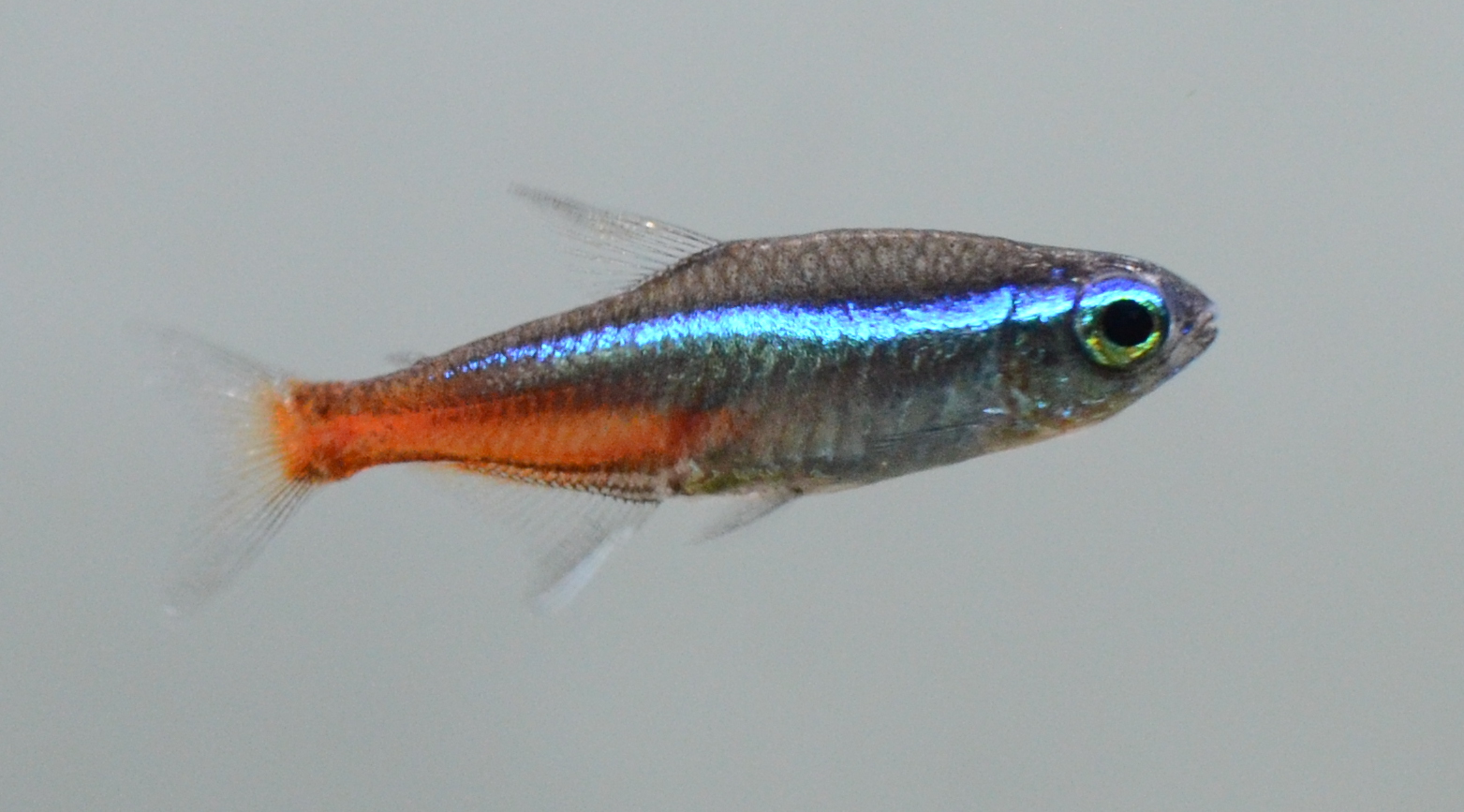
Schools of neon tetra fish (Paracheirodon innesi) use queuing to evacuate through narrow spaces without clogging or colliding, according to a study published in Scientific Reports.
Aurélie Dupont and colleagues observed neon tetra evacuate in groups of 30 through a narrow opening in a tank, which ranged in diameter from 1.5 to 4 centimetres, in response to the movements of a fishing net. Neon tetra measure approximately 0.5 centimetres wide and 3 centimetres long.
The authors observed that fish evacuated at faster rates through larger openings than smaller openings, but that fish evacuating through all sizes of opening tended to do so at a constant rate — with the exception of the last few fish in each group, who tended to exit more slowly. Although fish gathered around openings of all sizes prior to passing through them, the authors did not observe physical contact between evacuating fish. Together, the findings indicate that neon tetra may wait or queue before evacuating through narrow openings in order to maintain a preferred social distance and avoid clogging. This is similar to evacuation behaviours observed in previous studies of ants but is in contrast to those observed in herds of sheep and human crowds, where clogging often occurs.
The authors suggest that the behaviours of fish in their study may reflect the behaviours of schools of wild neon tetra passing between rocks in rivers. They propose that their findings could be used to inform the development of swarm robots, as well as traffic management methods for autonomous cars and human crowds.
Multimedia

Attachments
Note: Not all attachments are visible to the general public. Research URLs will go live after the embargo ends.


