 Sign In



 Australia; NSW; VIC; TAS
News release
From:
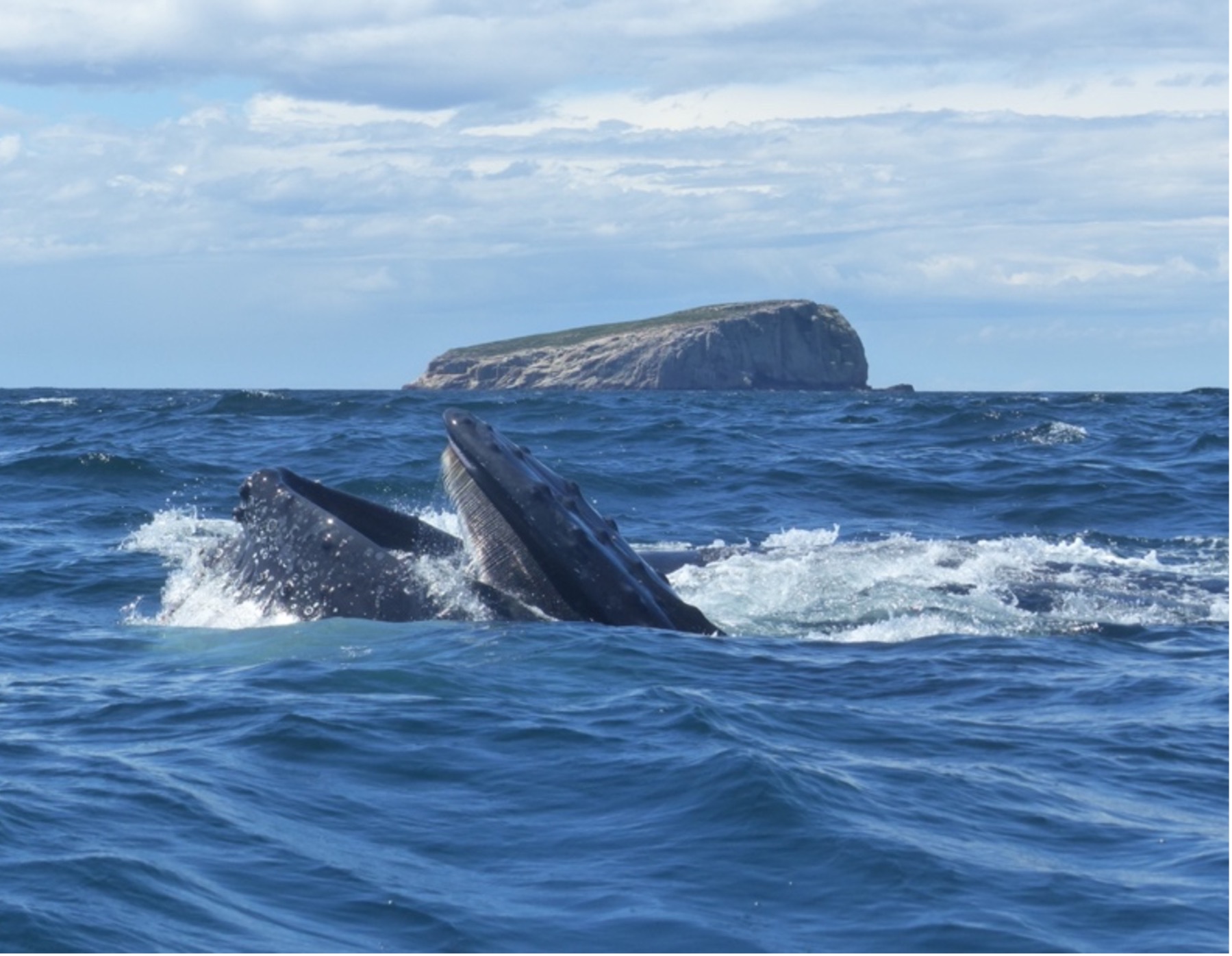
New research using citizen science and social media records reveals humpback whales are feeding regularly along Australia's east coast migration route, particularly in southern NSW and Tasmania.
This is despite traditional assumptions that whales largely fasted between Antarctic feeding grounds and tropical breeding areas.
Led by Griffith University PhD Candidate Sarah McCulloch, analysis of more than a decade of observations identified 199 feeding events involving 1,417 whales, revealing supplementary feeding during migration may be far more common than previously understood.
By analysing social media posts from 2013-2024, researchers compiled the most extensive dataset to date of humpback whale feeding behaviour in Australian coastal waters.
Most feeding observations occurred in waters off southern New South Wales (45 per cent / 91 events); eastern / southern Tasmania (28 per cent / 56 events); Victoria (12 per cent / 24 events).
Together, these regions accounted for about 85 per cent of all feeding observations that were documented.
“Feeding also occurred outside expected times and places,” Ms McCulloch said.
“We found feeding happened during both northbound and southbound migrations.
“In Tasmania and Victorian waters feeding also took place during almost every month of the year, even during the summer months when whales are generally expected to be feeding in Antarctica.”
Ms McCulloch said the feeding hotspots aligned with areas influenced by the East Australian Current (EAC) dynamics, coastal upwelling, nutrient-rich waters, and concentrations of krill and baitfish prey species.
Dr Olaf Meynecke, who co-led the research, said the team also found evidence of large-scale feeding groups in NSW waters, with multiple sightings involving up to 100 whales feeding together.
“One event near Bermagui involved about 150 feeding whales,” Dr Meynecke said.
“These observations support the growing evidence that large ‘super-group’ feeding events happen regularly in eastern Australian waters.”
The authors argued understanding where and when whales fed had important management implications, as these feeding areas often overlapped with fishing, shipping and offshore energy development activities.
They also highlighted the expanding population of humpback whales was under pressure from changes in Antarctica that resulted in a higher variability of krill supplies.
The study ‘Citizen science data reveal humpback whales feeding along the eastern coast of Australia’ has been published in Marine Mammal Science and was conducted as part of the Whales and Climate Research Program.
Multimedia


