 Sign In



 Australia; International; SA
News release
From:
Eating emulsifiers during pregnancy and lactation linked to health risks in mouse offspring
Study suggests need for awareness among mothers about risks of ultra-processed foods
A new study in mice shows that consuming emulsifiers—a common ingredient in ultra-processed human foods—during pregnancy or breastfeeding is associated with mild health risks for offspring. Maria Milà-Guasch of the Institut d'Investigacions Biomèdiques August Pi i Sunyer (IDIBAPS) in Barcelona, Spain, and colleagues present these findings August 24th in the open access journal PLOS Biology.
Emulsifiers help to preserve the texture of many ultra-processed foods, including some ice creams, breads, cake mixes, soups, salad dressings, and more. Prior research has linked consumption of emulsifiers to increased risk of gut inflammation, obesity, and other health conditions. In addition, unbalanced nutritional habits by pregnant or nursing mothers has been linked to long-term health risks in offspring. However, the specific effects of maternal consumption of emulsifiers on offspring have been unclear.
To help clarify these effects, Milà-Guasch and colleagues provided laboratory mice with water containing two kinds of emulsifiers commonly found combined together in human food—carboxymethylcellulose and polysorbate-80. From before pregnancy until the nursing offspring, female mice received the maximum concentration of each emulsifier allowed in human food products by the Food and Agriculture Organization and the World Health Organization. For comparison, other mice received water without any emulsifiers.
The researchers found that the offspring of mice that consumed emulsifiers had a greater risk of certain health issues, including mild metabolic, cognitive, and psychological impairments. These effects were strongest in male offspring, but female offspring also showed impairments.
A combination of gene-expression testing and other lab tests suggested that maternal consumption of emulsifiers led to perturbation of the development of neural circuits in offspring’s hypothalamus—a part of the brain that plays a central role in regulating metabolism.
Additional research will be needed to further clarify the effects on offspring of emulsifier consumption by pregnant and nursing people. Still, on the basis of their new findings, the researchers call for increased awareness of potential risks of consumption of ultra-processed foods by mothers. They express particular concern about products perceived to be healthy, including certain vegetarian and vegan products, which nonetheless contain emulsifiers that could potentially lead to health risks for offspring.
Coauthor Marc Claret adds, “Maternal consumption of emulsifiers may affect offspring health, promoting mild metabolic disarrangements, anxiety-like states and cognitive impairments.”
Expert Reaction
These comments have been collated by the Science Media Centre to provide a variety of expert perspectives on this issue. Feel free to use these quotes in your stories. Views expressed are the personal opinions of the experts named. They do not represent the views of the SMC or any other organisation unless specifically stated.
Dr Ian Musgrave is a Senior Lecturer in the Faculty of Medicine, School of Medicine Sciences, within the Discipline of Pharmacology at Adelaide University
Many foods are combinations of oils and other food types (starches and/or proteins). Generally, we don’t like the oils separating out from the other food components as they affect the texture and taste of the food. In commercial food, this is avoided by the use of emulsifiers to keep the oils suspended evenly in the food and generally keep all ingredients distributed evenly in the food.
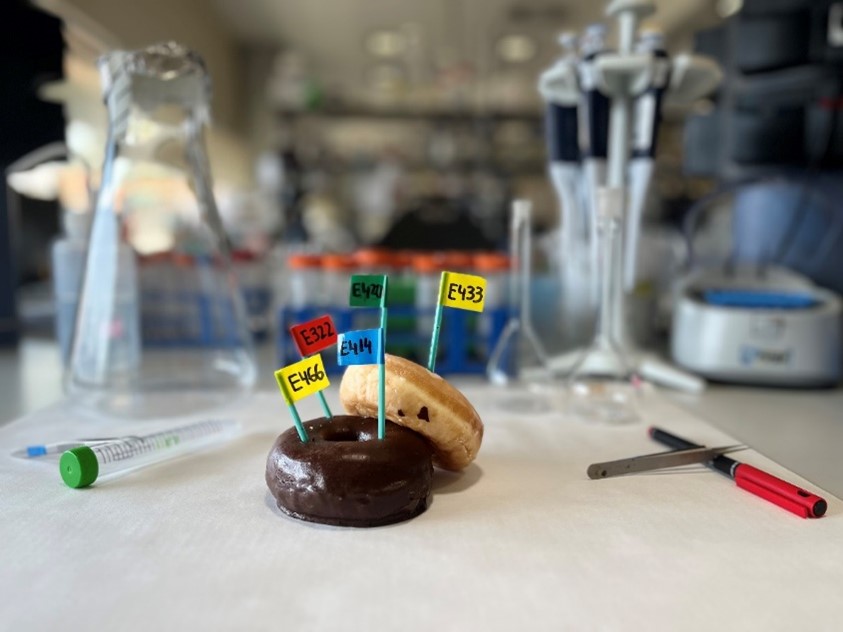
A variety of agents are used as emulsifiers, this includes Polysorbate 80 (E433) and sodium carboxymethyl cellulose (E 466), these ingredients have been extensively tested for safety in foods by agencies as the European Food Safety Authority (EFSA), the US Food and Drug Administration and the Joint FAO/WHO Expert Committee on Food Additives (JECFA). The safety evidence is periodically reviewed, with carboxymethyl cellulose reviewed in 2018 and Polysorbate 80 in 2015. At the time of writing extensive evidence, review suggests no harms from consumption of these compounds at or below the recommended levels.
However, evidence is not static and there are concerns that emulsifiers can, for example, disturb the microbiome with subtle effects on disease. The latest paper from the Neuronal Control of Metabolism (NeuCoMe) Laboratory tries to determine if maternal consumption of emulsifiers can affect off spring metabolism.
There are some important caveats about this study:
1) It’s in mice, mice are very important experimental models but the results of studies such as these cannot be directly related to what happens in humans.
2) The emulsifiers are given in drinking water. The point of emulsifiers is to suspend fats and be administered in food, given them in water is an entirely different context and may alter how they interact with the microbiome.
3) They are given at the maximum permitted concentration (1% each) for 12 weeks including the duration of pregnancy and lactation, which is a substantial chunk of a mouse's life. That is substantially above the recommended daily intake, and around 100 times the average human intake (8mg/kg body weight). To put it into context. Ice cream contains 0.5% polysorbate 80, the mouse intake was the equivalent of eating 8Kg of ice cream a day, every day, in the months before, during, and after pregnancy.
4) Even then the results are largely marginal and of unclear application to humans. Given the huge number of experiments done, it is entirely possible that some of these are statistical artefacts.
Overall, the results do not currently imply a risk for humans but is an indicator that more research needs to be done. Of course, eating a sensible diet during pregnancy is always advised, and overconsumption of calorie and fat-containing foods should also be avoided.

