 Sign In



 Australia; NSW; VIC; QLD; SA
Expert Reaction
These comments have been collated by the Science Media Centre to provide a variety of expert perspectives on this issue. Feel free to use these quotes in your stories. Views expressed are the personal opinions of the experts named. They do not represent the views of the SMC or any other organisation unless specifically stated.
Professor Adrian Esterman is Chair of Biostatistics at Adelaide University
"H5N1, also known as avian influenza or bird flu, is a highly contagious virus that primarily infects birds but can occasionally infect humans and other mammals. It is known for causing severe respiratory illness in humans with a high fatality rate. The virus spreads mainly through contact with infected poultry or contaminated environments. There is no evidence yet of human-to-human transmission. The virus has been found to infect a growing number of mammal species, including domestic animals like cats and dogs, as well as wild mammals and animals used in fur and dairy production.
Until now, Australia has been the only continent free from H5N1, mainly because Australia is not on the typical migratory route of wild birds. The confirmation of H5N1 bird flu on Heard Island, a remote Australian Territory, marks an important, but not unexpected development in the virus’s global spread.
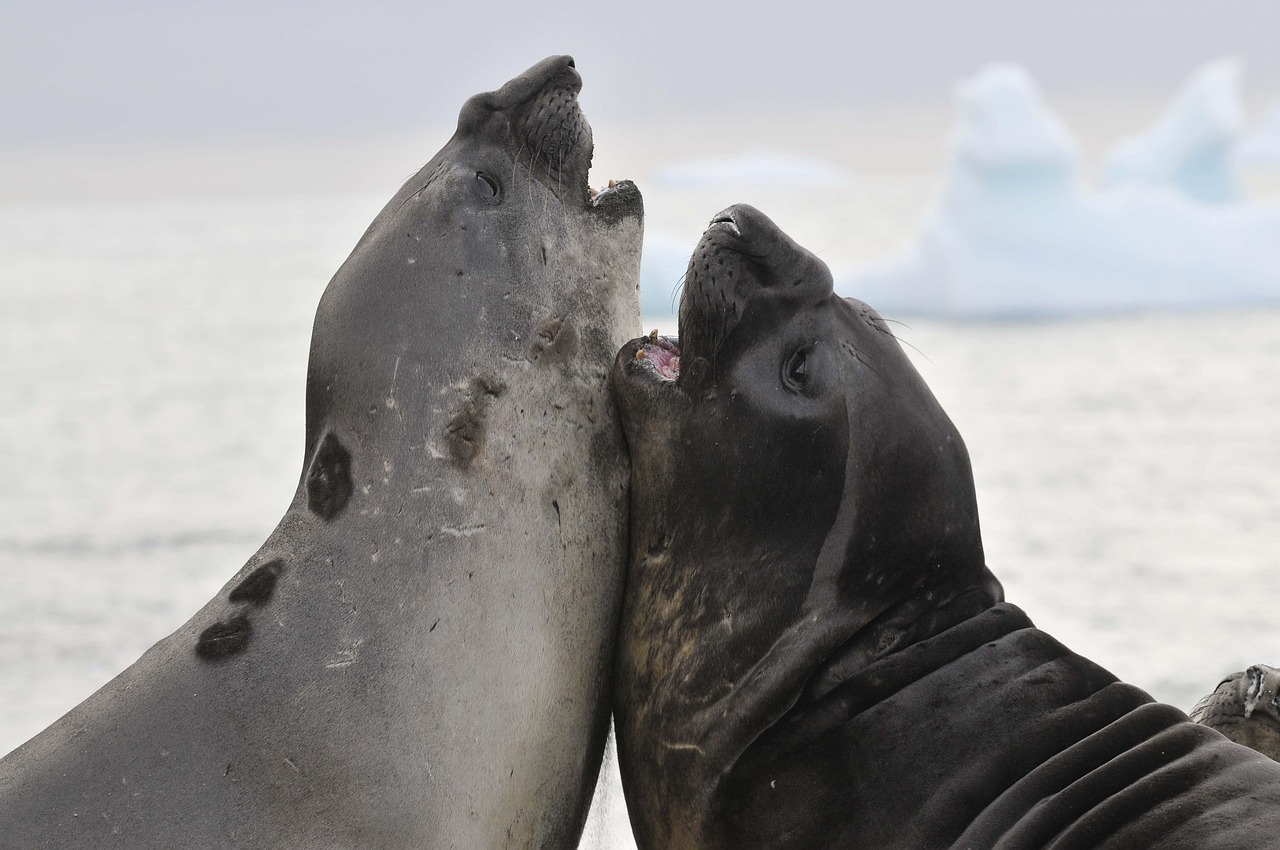
Heard Island has no permanent human population, and the current findings are confined to elephant seals, with no evidence yet of impacts on penguins or seabirds. However, it is a reminder that we cannot afford complacency.
Avian influenza has devastated wildlife across multiple continents, and once established in a new region, it cannot be eradicated. Australia has strong biosecurity measures and is fully prepared for H5N1 to arrive on the mainland.
While the public should not be alarmed, we should all understand that this is a global, evolving threat. Early detection and sustained preparedness are our best tools to protect Australia’s wildlife, agricultural industries and communities.
For those concerned about the possibility of H5N1 causing the next pandemic, Australia, along with many other countries are already stockpiling a vaccine against H5N1."

Associate Professor Jacqueline Stephens is an epidemiologist at Flinders University.
“A strain of highly contagious ‘bird flu’ – Influenza H5N1 – has been detected this week by Australian authorities in the elephant seal population on Heard Island. While the uninhabited island is in the remote Southern Ocean, about 4,100 km south-west of Perth, and it may seem to be little threat to us here on mainland Australia, epidemiologists are concerned. There is a growing consensus that this ‘bird flu’ will reach mainland Australia at some point, and it will likely have a devastating impact on our wildlife.
Since 2022, this H5N1 ‘bird flu’ has been causing devastating outbreaks in poultry, cattle, and marine mammals across the north and south Americas, with the spread of the disease linked to migratory birds. However, H5N1 also poses a risk to human health. Since 2024, in the USA there have been 71 human cases of confirmed H5N1 ‘bird flu’, mostly amongst poultry and dairy farmers. Epidemiologists are concerned because influenza is a highly adaptable virus and, since there have already been sporadic human cases, it is possible H5N1 could adapt to be highly contagious in humans, although thankfully this has not yet eventuated.”
Honorary Professor Robyn Alders AO is from the Development Policy Centre and Institute for Climate, Energy and Disaster Solutions at the Australian National University
“The detection of H5N1 bird flu on Heard Island shows that Australia’s surveillance systems are working. Although the current risk to the mainland is low, it is important to recognise that this new strain — now present on every continent except ours — poses a serious threat to people, domestic and wild mammals, and birds.
Preparedness activities are underway, and the task is substantial, as government agencies must coordinate with many partners, including public health officials, poultry industry representatives, veterinarians, wildlife rangers and carers, bird watchers, and the general public. Given the size of our country and the uniqueness of our wildlife, it is essential that we all stay informed and understand what actions to take if —and more likely when— this virus reaches mainland Australia.”
Associate Professor Wayne Boardman is a wildlife veterinarian from the School of Animal and Veterinary Science at the University of Adelaide
“This particular subtype of H5N1, the 2.3.4.4b subtype, is very infectious and has been causing disease all around the world.
It’s travelled from China right across to Europe, down to Antarctica, and is now present on Heard Island.
The elephant seals affected are the first case of this strain of H5N1 virus causing disease in an Australian territory.
Heard Island is quite a long way from Australia, but the virus can move across vast areas, probably carried by birds.
Although this is an avian influenza, it does affect lots of mammals. There have been many species of mammals affected over the years, and certainly, any pinnipeds can be affected.
A major concern in Australia is the Australian sea lion, which has a population between 12–14,000, 85% of which are found in South Australia. Australian sea lions are one of our iconic species, and the virus could devastate the population.
A variety of different species could be affected, from birds of prey down to shorebirds and seabirds. Poultry on poultry farms could also be affected.
There's a lot of work going on to try and make people aware of the disease. It is also potentially a zoonotic disease, so people should be careful in how they react to it, and they should report any cases they come across.
Whilst we can try to ameliorate the extent of an outbreak through on-ground biosecurity, it will be very difficult to prevent it from reaching mainland Australia, and it is expected that the virus will arrive at some stage.
How it will get here, we're not entirely sure. When it will get here, we have no idea. We can't stop birds flying, and so we can only prepare for what might happen if the disease does arrive.”
Professor Michael Ward is Sesquicentennial Chair of Veterinary Public Health & Food Safety in the Sydney School of Veterinary Science at the University of Sydney
“This detection of the avian influenza virus on sub-Antarctic Heard Island is not a surprise; we have been seeing this happen in the region for the last 18 months. It doesn’t substantially change our risk in mainland Australia, but we need to maintain a strong surveillance system and be alert to unusual mortality events in our wildlife and our domestic poultry.
We still don’t fully understand how diseases such as avian influenza jump from wildlife to domestic animals and humans, so prevention relies on early detection, which means maintaining a strong, resilient, and responsive surveillance system.”
Dr Emma Grant is a LIMS Stone Research Fellow and Group Leader within the La Trobe Institute for Molecular Science (LIMS) at La Trobe University.
"The Australian Government has confirmed the presence of highly pathogenic avian influenza (HPAI) H5N1, clade 2.3.4.4b, on Heard Island, an external Australian territory. This is the first detection of H5N1 in an Australian jurisdiction; however, Australia’s mainland remains officially H5-free.
H5N1, commonly known as “bird flu,” is a highly pathogenic avian influenza virus that has spread widely across the globe. This strain differs from previous H7 viruses that have caused outbreaks in Australia. Australia has successfully managed HPAI outbreaks before and is well prepared to respond should H5N1 reach the mainland.
The risk to human health remains low. Globally, human infections with H5N1 are rare, and there is no evidence of human-to-human transmission.
Australia maintains robust biosecurity systems to protect agriculture and human health. Ongoing surveillance by Wildlife Health Australia plays a critical role in the early detection of avian influenza in wild bird populations.
Members of the public should avoid contact with sick or dead birds and report unusual animal symptoms to authorities. Farmers are advised to minimise contact between domestic poultry and wild birds wherever possible."
Dr Farhid Hemmatzadeh is an Associate Professor in Virology at the School of Animal and Veterinary Sciences at Adelaide University
"The recent outbreak caused by the H5N1 highly pathogenic strain of avian influenza virus is the first report of clade 2.3.4.4b of H5N1 in Australia's sub-Antarctic islands. The virus was detected after the observation of an unusual mortality in the elephant seal population at Heard Island.
The H5N1 avian flu strain has a potential risk for human health, with the case fatality rate more than 50% of the infected patients. The H5N1 virus caused 470 human deaths out of 976 confirmed cases.
The H4N1 virus hasn’t been reported in poultry or wildlife in Australia and New Zealand except for one human case who contracted the disease overseas and failed to report to Australian airport biosecurity.
The 2.3.2.1a, common in South Asian birds has a greater potential for human infection, while the clade 2.3.4.4b that was recently detected in Heard Island has been previously reported in U.S. dairy cows. Different to the other H5N1 bird flu subtypes, the clade 2.3.4.4b H5N1 viruses can transmit between mammals (especially cows) through direct contact or from birds.
Considering the long distance between the Australian mainland and Australia's sub-Antarctic islands, the recent H5N1 outbreak does not increase risks to Australia. But the Federal Government has recently invested more than $100 million to strengthen bird flu preparedness and enhance national response capability – including towards the delivery of rapid response equipment in every state and territory. As the Minister for Agriculture, Fisheries and Forestry has stated, 'it does reinforce the ongoing need for Australia to remain focused on preparing for a potential outbreak,' Ms Collins said."
Distinguished Professor Vasso Apostolopoulos is Head of the Healthy Lifespan and Chronic Diseases Program within the School of Health and Biomedical Sciences at RMIT University Australia
"Avian influenza A(H5N1) is a highly virulent and rapidly evolving orthomyxovirus that constitutes a substantial pandemic threat due to its high case fatality rate (historically 49.2%) and capacity for cross-species transmission. Initially identified in Scottish poultry in 1959, A(H5N1) has caused recurrent epizootics with episodic zoonotic events, most notably the 1997 Hong Kong outbreak (18 human cases, 6 fatalities).
Since 2021, a genetically divergent subtype has become dominant in global avifauna, acquiring multiple adaptive mutations through genetic drift and shift. Both low and highly pathogenic avian influenza (LPAI and HPAI) variants have demonstrated the ability to cause a spectrum of clinical outcomes in humans.
In 2024, 65 laboratory-confirmed human A(H5N1) cases were reported internationally, including initial paediatric clusters in Cambodia, a fatal case in Vietnam, and Australia’s first case (a child infected in India who returned to Australia) featuring a novel reassortant genotype.
The U.S. documented its first cattle-to-human transmissions among agricultural workers, while Canada recorded a severe infection in an adolescent with no known animal contact. Detection in elephant seals on Heard Island (Australian territory) marks H5’s presence on every continent except Africa, heightening concerns over wildlife, biosecurity, and zoonotic risk to humans and agriculture. Enhanced surveillance, rapid molecular characterisation, and targeted vaccination remain critical."
Distinguished Professor Mark Von Itzstein is from the Institute for Biomedicine and Glycomics at Griffith University
"The appearance of a highly pathogenic avian influenza virus, such as H5, in the local region is of concern.
Clearly, further investigations into the extent of infection in the elephants seals will provide information about how potent this virus is.
We will have to monitor the situation very closely given the proximity to Australia."
