 Sign In



 Australia; NSW; VIC; QLD
Expert Reaction
These comments have been collated by the Science Media Centre to provide a variety of expert perspectives on this issue. Feel free to use these quotes in your stories. Views expressed are the personal opinions of the experts named. They do not represent the views of the SMC or any other organisation unless specifically stated.
Associate Professor Nicholas Chartres from the Faculty of Medicine and Health at The University of Sydney
"The federal government’s action is overdue but essential. It sends a clear signal to other health‑harming industries: if companies conceal evidence of the dangers posed by their products, they will face legal consequences and be held accountable.”
Today, virtually every Australian over the age of 12 carries PFOS – a type of PFAS – in their blood. Leading scientific and regulatory bodies have classified PFOS as carcinogenic (bladder, prostate, liver, kidney, testicular and breast) in humans, and once in the body or environment, they remain for decades.”
Internal industry documents have revealed that 3M – the largest producer of these PFAS chemicals – had known for decades that they were highly toxic and environmentally persistent. Rather than disclose this evidence, the company withheld its own studies from regulators, delaying restrictions that could have prevented widespread harm. They continued to generate billions in profit while harming our health and the environment. It is a strategy lifted directly from the tobacco industry’s playbook.”

Associate Professor Cheng Zhang is from the Australian Institute for Bioengineering and Nanotechnology at The University of Queensland
"PFAS is a pollution issue that Australia is only just starting to come to terms with.
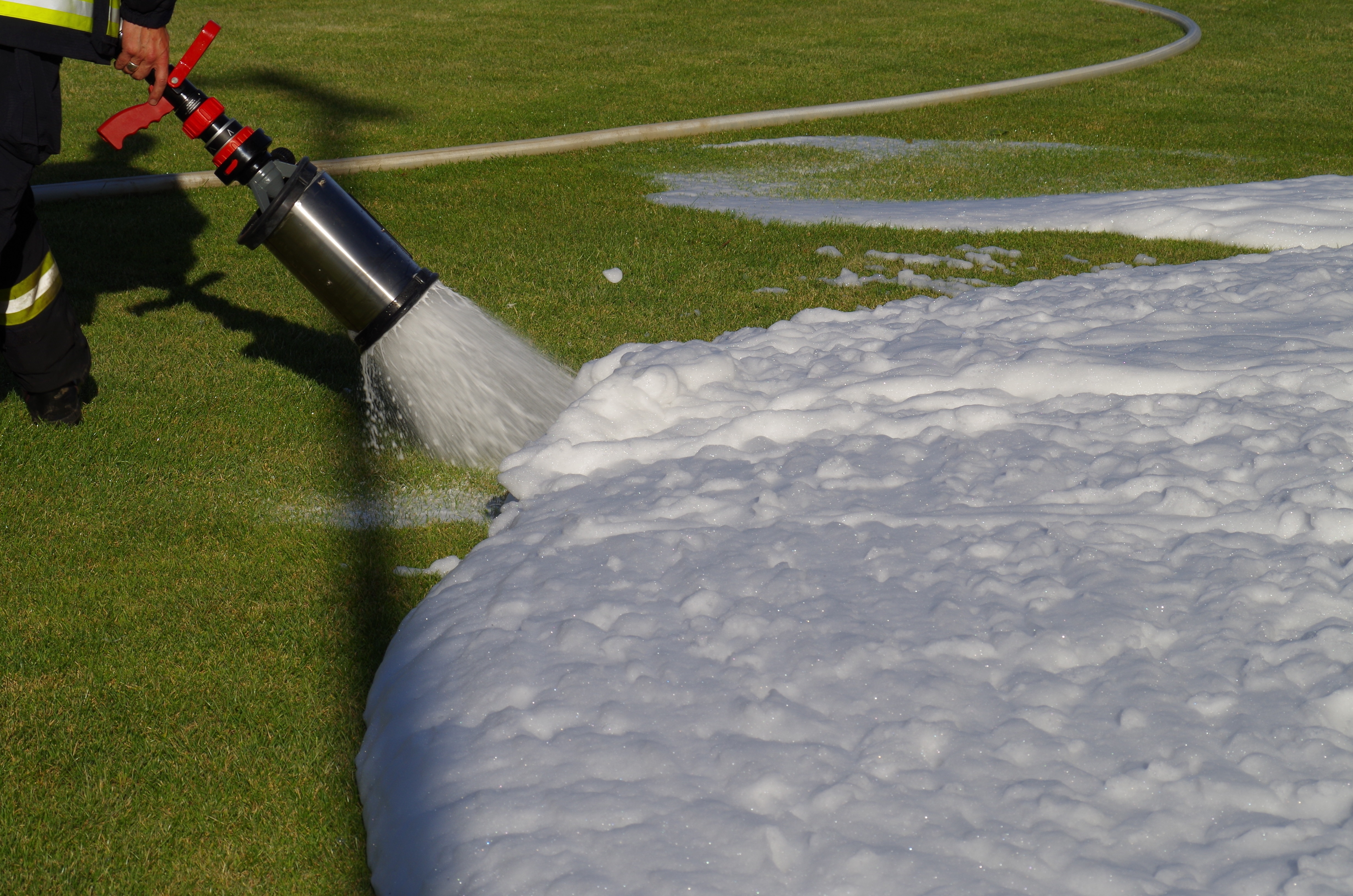
These chemicals were used in firefighting foams for decades across the country. Many items in our kitchens and wardrobes still contain them. They have contaminated a lot of land and water supplies. They are creating a very toxic legacy, and because the problem has not received the attention it requires, we are probably only just seeing the tip of the iceberg of how widespread it is.
A significant amount of taxpayer money has already been spent addressing PFAS contamination, and public awareness of the issue is continuing to grow. As understanding improves, there will likely be increasing focus on how these impacts are managed and how responsibility for remediation is shared."
Dr Saimon Moraes Silva is Director of the Biomedical and Environmental Sensor Technology (BEST) Research Centre at La Trobe University
"The Commonwealth’s decision to pursue legal action against 3M Australia is a watershed moment in Australia’s long struggle with ‘forever-chemical’ contamination. PFAS-based firefighting foams were marketed for years as essential safety tools, even as evidence mounted that these compounds persist in the environment, bio-accumulate, and are linked to cancers, liver damage and immune dysfunction.
Communities living around Defence airfields have already faced water restrictions, soil excavation and years of uncertainty, while taxpayers have funded an enormous clean-up effort. By seeking to recover more than A$2 billion in remediation costs, the government is finally putting a dollar figure on an environmental debt that industry shifted onto the public purse.
This case is bigger than a single company: it signals to all chemical suppliers that transparency, timely hazard disclosure and proactive phase-outs are non-negotiable. From a scientific standpoint, every kilogram of PFAS we prevent from entering soil or water today averts decades of escalating health risks and remediation costs tomorrow."
Dr Olalekan Simon Awoyemi is an independent research scientist specialising in PFAS contamination
"The reported legal action against 3M Australia reflects the increasing global scrutiny surrounding PFAS-containing firefighting foams and the broader transition toward PFAS-free alternatives. PFAS have historically been widely used because they provide exceptional chemical stability, thermal resistance, and surfactant performance, particularly in aqueous film-forming foams (AFFF) used to suppress high-risk fuel fires. However, the same chemical stability that made PFAS effective also contributes to their persistence in soil and groundwater, creating long-term environmental and remediation challenges.
From an environmental risk perspective, firefighting foams represent one of the highest-priority sectors for PFAS substitution because releases are often concentrated, large-scale, and closely linked to groundwater contamination. Internationally, regulatory pressure is accelerating the transition toward fluorine-free foams (F3) and other PFAS-free technologies. While these alternatives have improved substantially and are increasingly adopted in airports, defence facilities, and industrial settings, performance trade-offs can still exist under certain extreme fire conditions.
More broadly, the PFAS issue extends well beyond firefighting foams. PFAS have been used across textiles, food packaging, cosmetics, industrial surfactants, electronics, and medical devices because of their water and oil repellency, durability, and chemical resistance. As industries move toward PFAS-free alternatives, an important challenge is ensuring that replacement materials are not only technically effective but also environmentally sustainable and free from unintended long-term impacts.
This case highlights the growing importance of stronger chemical accountability, transparent regulation, and continued investment in safer material innovation and remediation technologies."
Oliver Jones is Professor of Chemistry at RMIT University in Melbourne, Australia
"I am not totally surprised by this announcement; there have been rumours that it was on the cards for a while. But what are PFAS, and what does this case mean for the public?
PFAS stands for per- and polyfluoroalkyl substances. They are a diverse class of potentially thousands of synthetic chemicals whose common feature is the presence of carbon-fluorine bonds. One of their major historical uses was in aqueous film-forming foams (AFFFs), which were used to fight heavy fuel-based fires. This is why we often find high concentrations at airports, military bases, and firefighting training grounds.
Although they are often treated as if they were all the same, not all PFAS have the same properties or risks. Some, like PFOS and PFOA, can bioaccumulate and so are of concern. In contrast, some PFAS, such as fluoropolymers like PTFE/Teflon (found in non-stick pans and waterproof clothes) are inert; they don’t react with biological systems and don’t bioaccumulate and thus are of less concern
This case is, however, not directly about toxicology but rather about the government recovering costs for PFAS contamination at various defence sites across Australia, several of which were also implicated in contamination of drinking water. The Commonwealth’s case includes several allegations that 3M basically withheld and/or misrepresented the environmental risks of their aqueous film-forming foams. If the allegations are true, this is a pretty bad look for 3M to say the least, and it would seem reasonable to try to recover some of the costs of sorting it out.
Nevertheless, whether or not 3M was a perfect corporate citizen does not automatically affect the risk of PFAS exposure to the general population, who are exposed to PFAS at much lower concentrations than those found at the sites in this specific case.
Although community concern and anger over PFAS are often not proportional to their concentration or risk, PFAS contamination is widespread, and it is not unreasonable to hold a company that allegedly knew of the risks and did not take action at least partially accountable. I suspect this is not the last PFAS lawsuit we will see in this country”.
