 Sign In



 Australia; International; NSW; VIC
News release
From:
Beyond AI’s Surging Energy Use: UN Details Escalating Water, Land, and CO2 Emission Consequences
Artificial intelligence is driving a surge in land, water and climate consequences cascading from the technology’s intense and fast-rising energy consumption; UN University calls for urgent, multi-stakeholder action
Richmond Hill, Ontario, Canada – A new UN report delivers the most comprehensive view yet of the environmental costs of artificial intelligence – not just its burgeoning electricity use and carbon emissions but also its water and land footprints, its e-waste consequences, as well as the unjust distribution of AI's benefits and burdens worldwide.
According to Environmental Cost of AI’s Energy Use: Carbon, Water and Land Footprints, from the United Nations University Institute for Water, Environment and Health (UNU-INWEH): “One of the most consequential dimensions of AI that remains comparatively under-examined is its environmental footprint and the justice implications that follow."
Its expansion involves “physical infrastructure and supply chains, including data centers, chips, electricity generation, cooling systems, water withdrawals, land occupation, critical minerals, and eventual e-waste.”
This report, “is a step forward in addressing the current gap in AI's environmental governance by assessing its environmental footprints. The investigation goes beyond the carbon-only lens... It examines AI's indirect environmental footprints through energy use, quantifying the carbon, water and land footprints associated with generating the electricity required to operate AI at scale, and highlighting how outcomes vary substantially by location depending on electricity supply mixes.”
“This matters,” the report adds, “because ‘low-carbon’ is not automatically ‘low-water’ or ‘low-land,’ and evaluating sustainability through a single metric can hide trade-offs and shift burdens onto places already facing water stress or land pressure. These asymmetries can reinforce the environmental problems of local communities while strategic advantages of AI flow elsewhere.”
According to the report, expenditures on AI this year are projected to exceed USD 2.5 trillion and the global market is foreseen growing from USD 189 billion in 2023 to nearly USD 5 trillion by 2033, a 25-fold increase in less than a decade.
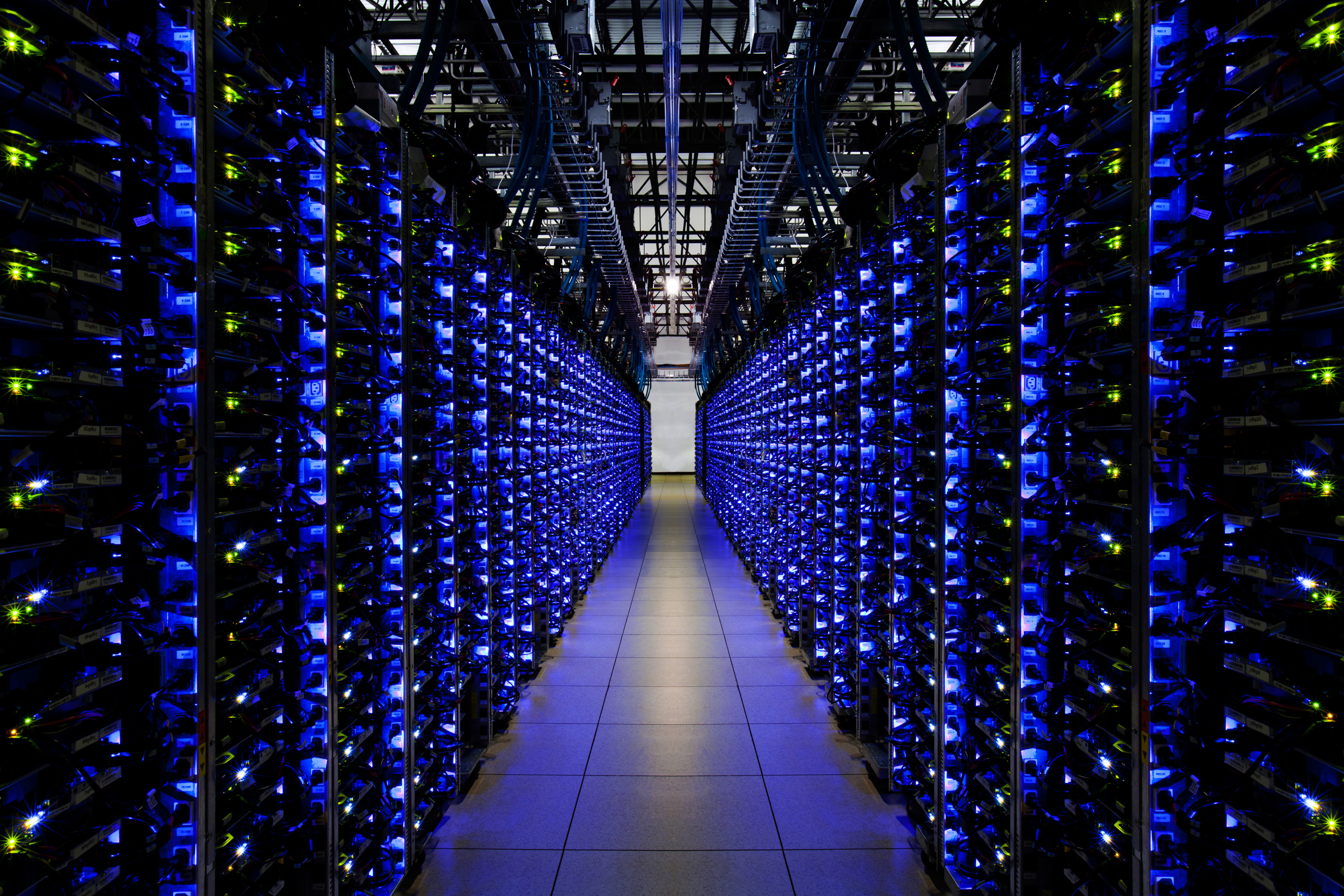
Reflected in that surge are sobering energy consumption statistics and insights. For example, if data centers, the physical backbone of AI, were a country their estimated 448 terawatt-hours (448 billion kWh) of electricity consumption in 2025 would rank them 11th globally, roughly on par with France.
AI-related workloads accounted for roughly 20% of total data center electricity use in 2025. If that share rises to the expected 40% by 2030, AI-related electricity consumption could reach approximately 374 TWh. On current trajectories that figure could roughly double to 945 TWh by 2030, accounting for almost 3% of projected global electricity use, or enough to supply power to all 1.3 billion people in Sub-Saharan Africa for over 5 years.
Depending on how that electricity is generated, associated emissions could reach 400 million tonnes of CO₂e, comparable to the UK’s emissions from all sectors in 2025.
The associated land footprint of generating that electricity in 2030 would exceed 14,000 km², roughly the area of Northern Ireland.
Meanwhile, the estimated 9.3 trillion liters of water used by data centers, would meet the drinking water needs of Earth’s 8.1 billion people for about 1.6 years.
The report notes that, even when some withdrawn water is returned, “large-scale withdrawals can strain aquifers and river systems, particularly in arid or groundwater-depleted regions.”
Training is only the beginning
Training new AI models requires immense energy. The estimated 100 GWh of electricity required to train Chat GPT-5 roughly equals the annual residential usage of 770,000 people in Sub-Saharan Africa (60% of the region’s population); the associated water footprint is estimated at 1 billion liters and a land footprint of 1.5 km2 of land, or roughly the size of 215 football fields. While these numbers are significant, the UN scientists now warn that the footprint of AI’s daily use is far bigger.
ChatGPT alone is estimated to process around 2.5 billion prompts per day. At a conservative 0.42 Wh per text prompt, that translates into roughly 383 GWh of electricity per year. The related annual water footprint would be equal to the minimum annual domestic water needs of some 500,000 people in Sub-Saharan Africa, and the land footprint exceeds 800 football fields.
“The numbers grow drastically once the AI embedded in mass platforms (such as Google Search) is counted,” the report says. “Crucially, per-use energy varies by orders of magnitude across modalities and output lengths, so product defaults and user choices are footprint determinants.”
It notes that Google processes an estimated 5 trillion searches annually and a conventional search uses about 0.3 Wh. An AI-enhanced generative search uses up to 3 Wh, a 10-fold increase.
As the report explains, “Every kilowatt-hour of electricity used to train or run an AI model carries environmental footprints, including a carbon footprint from the generation mix; a water footprint from electricity production and cooling; and a land footprint from energy infrastructure, reservoirs, and fuel extraction. These three footprints do not always shift in the same direction.”
“For example, switching from coal to bioenergy can, on average, reduce the carbon footprint by 72%, but this comes at the cost of much larger water and land footprints. On average, the water footprint of bioenergy is more than 30 times greater than that of coal and its land footprint is 100 times greater. In different regions and countries, electricity is produced from various sources. The environmental footprint of energy production in a given location depends on the share of each source in its electricity supply portfolio.”
Video generation as an emerging environmental crisis
Meanwhile, a single high-resolution AI video clip can require more than 415 Wh, making it more energy-intensive than the creation of hundreds of AI images. When resolution and frame count are factored in, energy requirements rise quadratically (double the output quadruples the energy used). And as video gets embedded in mainstream platforms, this quickly becomes an infrastructure-scale problem.
The report also underlines the growing problem of AI hardware waste.
“At the end of life, poorly managed e-waste can expose frontline communities to hazardous substances. By 2030, AI infrastructure could generate up to 2.5 million metric tons of e-waste each year, roughly equivalent to discarding 250 Eiffel Towers annually.
The findings show that responsible AI requires full value-chain governance, from mineral sourcing to recycling and safe disposal.
An uneven distribution of benefits and burdens
The minerals powering AI hardware are often extracted in ways that cause concentrated environmental and social harm, particularly in the Global South and in regions with weak regulatory oversight.
The new report underscores a structural inequity at the heart of the AI boom. Frontier AI infrastructure is concentrated in a small number of locations. Countries that lack domestic compute capacity depend on external providers, giving them little control over access, pricing, or data governance. The result is a widening digital divide between nations that build and control AI systems and those that simply consume them while often bearing a disproportionate share of the environmental costs.
(Related: the recent UNU-INWEH report Critical Minerals, Water Insecurity and Injustice).
Further points
Low-carbon is not low-impact
Brazil's hydro grid produces electricity 77% below the global carbon average, but its water and land footprints are nearly triple the global mean.
The UK's grid has a land footprint more than four times the global average. The report directly challenges the assumption that renewable-powered data centers are always green or sustainable, a finding that cuts against a lot of current industry messaging.
The Jevons Paradox trap
The report underlines that efficiency gains alone will not reduce AI's total environmental footprint. Lower costs drive higher volumes of use, potentially erasing all savings. It calls explicitly for resource budgets — caps on tokens, GPU-hours, or kilowatt-hours — not just better hardware.
AI computing is 90% concentrated in two countries
Only 32 nations host AI-specialized cloud infrastructure, and 90% of that capacity is in the US and China. More than 150 countries have no sovereign AI computing at all. The report frames this not just as an economic divide but as an environmental justice issue: excluded countries bear mineral extraction and e-waste burdens while the strategic benefits flow elsewhere.
Ireland as a live cautionary example
Data centers now account for 21% of Ireland's total metered electricity, up from 5% in 2015, exceeding all urban household consumption combined. The national grid operator has paused new approvals around Dublin until 2028. It's a concrete, documented example of what happens when AI infrastructure growth outpaces energy planning — and a preview of what other countries are heading toward.
* * * * *
A roadmap for responsible AI
The report calls for a responsible AI ecosystem built on six principles: transparency; efficiency by design; equity and environmental justice; lifecycle responsibility; global cooperation; and sustainable use. Practical recommendations are directed at each major group of stakeholders:
- Governments should integrate AI infrastructure into energy planning, water governance, and land-use permitting, and require standardized environmental footprint reporting.
- Industry and AI developers should treat model selection, default outputs, and routing decisions as footprint determinants, and improve efficiency by design.
- Users and deploying organizations should adopt fit-for-purpose use — selecting the lightest model and lowest-energy format that meets the task.
- Data center operators and utilities should treat siting and energy procurement as environmental footprint decisions, and apply cumulative impact assessment.
- Investors should treat electricity, carbon, water and land footprints as material risks in AI infrastructure portfolios.
- Communities and civil society should be involved early in data center siting decisions, with enforceable transparency and grievance mechanisms.
- International institutions should support harmonized measurement standards, reduce incentives for cross-border burden shifting, and build compute capacity in excluded regions.
"Concise mode"
The report warns that even the language used by AI users can make a huge difference. Simply getting rid of politeness by not saying “please” and “thank you” can reduce the overall footprint significantly by making the prompts more concise. For example, a concise response mode can reduce ChatGPT token output by 30%, saving 87-98 GWh of electricity per year, equivalent to the annual residential electricity of nearly 760,000 people in Sub-Saharan Africa. The report reframes user behavior and product design as environmental governance tools, not just convenience features.
"Technological advancement must remain environmentally manageable," the report states, and that requires measuring, disclosing, and acting on the full footprint, not just the carbon portion.
Less visible public engagement with AI
Netflix, one of the world's largest video streaming services, offers an example of how AI is embedded in daily digital interactions. While users may not associate Netflix with AI directly, the platform uses machine learning models and real-time processing systems for personalized recommendations, content delivery optimization, and dynamic compression to reduce data use.
In the financial sector, generative AI-driven applications automate customer service, but also improve fraud detection and risk assessment. In healthcare, AI is employed in diagnostics, medical imaging, and patient risk prediction—improving speed and precision of care, while reducing treatment costs.
With an estimated 4.5 billion people globally lacking essential healthcare and an expected shortfall of 11 million healthcare workers by 2030, AI has the potential to narrow these critical gaps, particularly in underserved communities where resources are scarce.
Some estimates suggest that partially autonomous vehicles could account for one in 10 new vehicle sales by 2030, as systems become better at interpreting environments and travel routes and customers gain confidence in safety. Robotaxis are already giving 1.3 million rides each month, mostly in the U.S., but also in China, UAE, Singapore, Japan, and other countries, highlighting the potential for deployment worldwide.
An increasingly polarized global workforce
The report warns that, “without deliberate intervention, the global workforce could become increasingly polarized, divided by access to AI technologies and related workforce skills. Those with fewer training opportunities are especially vulnerable to the changes AI is bringing. While job disruption is a visible consequence of AI deployment, the technology's influence extends far beyond the workplace, into realms of warfare, ethics, and even existential risk.”
The report concludes: “AI offers remarkable potential, but fulfilling this promise responsibly requires systemic change. Every interaction draws on finite resources, and the total environmental footprint depends on how AI systems are designed, how often they are used, and what tasks they perform. Real progress depends on embedding sustainability at every level, from hardware and model design to deployment, governance, and public use. By committing to transparency, engineering for efficiency, choosing wisely as users and institutions, protecting communities that face disproportionate burdens, and cooperating across borders, society can ensure that progress in intelligence is matched by progress in care. Responsible AI is possible when capability and stewardship grow together within planetary limits.”
Expert Reaction
These comments have been collated by the Science Media Centre to provide a variety of expert perspectives on this issue. Feel free to use these quotes in your stories. Views expressed are the personal opinions of the experts named. They do not represent the views of the SMC or any other organisation unless specifically stated.
Professor Daswin De Silva is Professor of AI and Analytics and Co-Director of the La Trobe AI Institute at La Trobe University
"This new UN report from the UNU-INWEH provides a comprehensive assessment of the environmental impact of the development and adoption of AI, across the full supply chain from chips and data centres to e-waste.
The report acknowledges the transformative potential of AI; however, given that the authorship team is predominantly from the environmental sciences, it is likely that the full spectrum of benefits of AI, such as the extent of the generational productivity uplift, is not adequately captured in this report. The report briefly mentions how technical advances in AI research, just within the last two years since the release of ChatGPT, such as model compression, pruning, quantisation, knowledge distillation, etc., are helping to reduce the energy footprint.
However, this deserves more visibility as we are currently in the growth/hype phase of AI, where frontier AI companies and data centres themselves are actively experimenting with energy-efficient, low-compute methods that reduce their production and service cost. In some ways, we experience this change in how free versions of most frontier models provide highly accurate and useful responses. Once we pass the growth phase, we could be having a different conversation about AI in a complex, dynamic ecosystem, where small variables add up.
The report should have also unpacked how data centres are significantly more efficient compared to energy-intensive sectors like mining, manufacturing and transport. The report concludes by recommending guidelines for a responsible and transparent AI and data centre sector, where capability and stewardship co-exist. This is an important message to ensure we bring all stakeholders together for informed and sustainable decision-making, also perhaps for the next iteration of this report."

Associate Professor Dr Walayat Hussain is an Associate Professor of Information Technology at Australian Catholic University and leads the AI for Decision Excellence AIDX Lab.
"The environmental footprint of AI deserves serious attention, but the debate must be technically accurate and balanced. Data centres, cloud services, social media, video streaming, e-commerce, online banking and large-scale digital storage were already consuming electricity, water, land and cooling resources long before the recent rise of generative AI. AI is adding new demand, and in some areas accelerating it sharply, but it is not scientifically accurate to place the whole burden of the digital infrastructure problem on AI alone.
The real issue is not simply that “AI is bad for the environment”. The issue is that the wider digital ecosystem needs stronger governance: transparent reporting, cleaner energy, efficient hardware, responsible data-centre siting, water-aware cooling systems, and proper management of chips and e-waste. These standards should apply to AI, but also to the broader computing infrastructure that modern societies already depend on.
I am also cautious about framing AI mainly as a technology that benefits wealthy countries while poorer countries carry the burden. That risk is real if AI is governed badly, but it is not the whole picture. In education, AI may become especially valuable for developing and lower-resource countries, including places such as Pakistan and India, where many students face barriers that are not common in wealthier systems: teacher shortages, remote communities, disrupted schooling, language barriers, limited access to specialist subjects, and lack of personalised academic support.
A useful example is the UNICEF and Google education partnership across countries including Brazil, India, Kenya and Pakistan, which aims to support digital learning, teacher capacity and AI-powered personalised instruction. This does not mean AI will automatically solve educational inequality, and it must not be used as a cheap replacement for teachers or schools. But it does show that AI can be directed toward the needs of underserved learners, not only toward commercial or elite applications.
The right debate is therefore not “AI is good” or “AI is bad”. It is about responsible use. We should reduce wasteful, high-energy applications and demand transparency from industry, while protecting high-value uses that can expand access to education, healthcare and opportunity. If governed carefully, AI could help narrow some inequalities rather than simply deepen them."
Distinguished Professor Geoff Webb is an Australian Laureate Fellow in the Department of Data Science and Artificial Intelligence at Monash University
"I welcome this comprehensive report on AI’s significant environmental impacts. As if they are not enough, these concerns should be considered alongside the major social and economic effects that the report mentions only briefly and does not address in its action plan.
Australia has deep structural incentives for replacing employees by automation. For example, someone on an average income receives $81,700 take home pay augmented by $12,792 superannuation, a total of $94,468 remuneration. In addition to paying this, an employer also pays the $22,768 income tax and in Victoria, a further $5,170 payroll tax. On top of this 30% impost that the employer must pay on the income the employee receives, are all the further overheads of administration and of compliance with employment law. In contrast, automation is treated as an investment and receives tax incentives such as accelerated depreciation.
In addition to these structural factors, Big Tech has successfully removed the brakes of high capital costs and long times to deployment that have historically slowed the rate of automation. Big Tech is removing the capital cost of adoption by taking on the primary capital costs itself and providing pay-as-you-go models for AI deployment. By moving automation online instead of requiring physical equipment, deployment times are also greatly reduced.
As a result, unlike past technical revolutions, it seems likely that the speed at which jobs are lost will greatly outstrip the speed at which new jobs are created.
Further, AI embodies the North American culture and values of the text on which it is predominantly trained. As AI becomes increasingly ubiquitous, its use will inevitably lead to cultural and value seep and an acceleration of the current drift towards a planet-wide mono-culture.
We must act now to address these profound issues if we are to prevent extraordinary environmental degradation, social disruption and cultural decline."
Niusha Shafiabady is a Professor of Computational Intelligence and Head of the IT Discipline at the Australian Catholic University
"Artificial intelligence may feel weightless and virtual, but this report makes clear that it is firmly rooted in the physical world. Every prompt, every model and every data centre draws on energy, water, land and minerals, and the scale of that demand is growing as AI adoption accelerates. The study lays out the numbers with unusual clarity, showing how training frontier models, running billions of daily queries and expanding global data centre infrastructure all contribute to a measurable environmental footprint.
What matters most for the public conversation is perspective. AI is not the largest environmental threat we face. The far greater risks come from fossil fuel emissions, land degradation, industrial agriculture and global supply chains. One of the biggest dangers is our collective ignorance about the relative scale of these issues. Without that context, it is easy to overestimate the impact of AI and underestimate the sectors that drive the majority of global environmental harm.
This study is valuable because it brings clarity rather than alarm. It helps Australians understand where AI fits in the broader hierarchy of environmental pressures and why responsible planning, transparency and efficiency matter as AI adoption accelerates."
Professor (Ahorangi) Nirmal Nair, Department of Electrical, Computer, and Software Engineering, Waipapa Taumata Rau – University of Auckland, comments:
“I had commented regarding concerns around electricity demand in New Zealand in 2024 when ChatGPT first appeared, and I expressed similar views again in March 2026 when a Southland data-centre plan was announced.
“This new report speculates on potential secondary and tertiary impacts across countries leading AI data-centre infrastructure build-out, and it is not surprising to me that New Zealand is not in that list since we have not yet had an honest national discussion around the role of AI infrastructure build-up and the value it could bring to our communities.
"Instead, much of the discussion in New Zealand has focused on the electricity grid and supply concerns - which has been secure, reliable and resilient to-date.
“Comparable advanced OECD economies with highly renewable electricity systems, such as Canada, France, Sweden and Switzerland, are included in this report. Even our carbon-energy intensive brethren Australia are in this list.
“Since New Zealand is not cited in this report, it suggests we currently have limited visibility in global AI infrastructure development, and many of the secondary or tertiary risks identified may not yet be directly relevant to New Zealand’s current situation.
"Instead, these days we 'Kiwis' are discussing uncertainty around in-effectiveness of our loose industry-led NZ Electricity Policy and literally non-existent NZ Energy Policy, and relying entirely on the 2019 Carbon Act which outlines long-term aspirations around emission mitigation/adaptation.
"Ground facts are that our electricity costs and energy (carbon-based fuels) are expensive compared to our relative cost-of-living. Security of both energy and electricity have become topics of upcoming elections.
"Personally, I feel that we should be confident to proceed with AI-data centre infrastructure to ensure not getting isolated with our Northern Hemisphere Tangata and support delivery of AI services and capability building to Pacific countries in our part of Planet Earth.
“Globally, we are increasingly connected through internet-based technologies and devices, and AI-enabled engagement is likely to continue expanding across new digital platforms and services that will ensure the current digital-waste we have proliferated will be replaced.
"Just like the progression of memory devices from floppies to USBs to the cloud, for example."
Professor Te Taka Keegan, AI Institute, Computer Science Department, University of Waikato, comments:
"This UN report confirms what many in Aotearoa already suspected: AI is not weightless. Behind every query and generated image lies a web of real-world impacts, from carbon emissions, freshwater consumption, land use, and critical mineral extraction, to growing mountains of e-waste.
"And while building AI models is energy hungry, the report makes clear it is now the billions of daily interactions with those models that drives the majority of the environmental footprint. As AI is embedded into everyday platforms and, in many cases, switched on by default whether users choose it or not, that footprint compounds at scale.
"These costs are not evenly distributed. The environmental burden falls hardest on communities least likely to capture the benefits.
"Aotearoa does not feature in this report, and that absence is worth noting. With around 60 data centres and only three hyperscale facilities, our current AI footprint is low. But hyperscale is where the concern lies: these facilities can have environmental impacts a thousand times greater than conventional centres, and more are planned for Aotearoa.
"Ngāi Tahu ki Murihiku have been clear in their Cultural Impact Assessment. Freshwater is a precious taonga, finite and fundamental to all life. But water is not the only concern. Air pollution, noise, the removal of wetlands that Mana Whenua regard as the kidneys of the Taiao, and the disturbance of wāhi tapu are all identified as real and significant impacts of hyperscale development.
"The report calls on governments and developers to engage meaningfully with affected communities and to adopt clear environmental governance frameworks. Māori data governance principles offer one such framework, locally grounded, relationally oriented, and designed for intergenerational accountability.
"What is missing is not the framework. It is the collective willingness of developers and Crown agencies to genuinely engage with it."
Dr Ulrich Speidel, School of Computer Science, The University of Auckland, comments:
"AI is power-hungry! Conventional data centres were mostly used for web and database server hosting, which don’t require an enormous amount of number crunching. The type of chip used for AI is an import from graphics processing - the sort of chip used for high-end video gaming or movie making.
"A Graphics Processing Unit (GPU) suitable for serious AI model training and inference will typically consume several kilowatt of power. That’s roughly the same as a domestic oven or a big hot water cylinder – the biggest ticket power users in most households.
"Training requires thousands of these chips, and unlike your oven or hot water cylinder, they run continuously. All of this power eventually exits the chip as heat, which needs to go somewhere or the chip will melt.
"But the figures in the report need to be put into perspective. If ChatGPT use requires 383 GWh per year, that’s less than 1/10th of the annual output of either Huntly or Manapouri. Remember ChatGPT is a system with global reach, not just for NZ, and our power stations aren’t that grunty by international standards.
"According to the report, in 2025, AI workloads alone accounted for around 20% of total data center electricity use - a share expected to double by 2030 - pushing electricity demand to roughly 374 TWh.
"Once we get to the 374 TWh, we’re in more serious territory. At that point, the world would need around another 45,000 MW in installed generating capacity – that’s around 40 Huntlys, or about 15% of the solar generating capacity that China installed last year.
"The energy cost involved here will also be a driver for the development of more energy-efficient AI processor technology, and energy recovery from the waste heat. Remember also that waste heat can in some places be a desirable by-product, e.g., for heating.
"AI technology may also be able to accelerate the development of more energy-efficient renewable energy technology, such as solar cells that can convert more than the current around 25% average of incoming solar power into electricity, better batteries with more capacity that are safer and faster to charge, and more efficient wind turbines, and even combustion engines that deliver more power for less fuel use, and so on. This could compensate for the extra emissions from AI use."
Dr Amanda Turnbull-McRae, Te Piringa Faculty of Law, University of Waikato, comments:
"The new UN report recognises not only the forward march of awareness in respect of the environmental costs of Artificial Intelligence (AI) but also the spectrum of connected social, material and justice-related challenges it poses.
"When it comes to AI’s substantial energy draw along with its correlated carbon, water and land impacts, the report highlights that we need to think both about how much energy we are using and also how we are using AI.
"The report also draws attention to the 'Jevons Paradox'— or the rebound effect. As AI models become more efficient, these gains ironically increase AI’s total environmental footprint rather than decrease it.
"So even when AI architecture and hardware advance and become more efficient, these efficiencies lower the cost of computation, which in turn drives up higher volumes of use.
"This trap tell us that more needs to be done than simply improving hardware. We need to think about limiting energy use.
"Further, the UN report goes beyond documenting data and measurement: it offers action. Specifically, the report provides six guiding principles for a responsible AI ecosystem including, transparency, efficiency by design, equity and justice, lifecycle responsibility, global cooperation and sustainable use. These principles form a roadmap for a responsible AI ecosystem.
"Of particular relevance to Aotearoa New Zealand is the report’s final counsel: responsible AI is about the twinning of capability with stewardship. This involves making environmental disclosure in respect of AI routine, both at the model level and at the task level.
"It means incorporating projected AI demand in both climate and energy planning. This is crucial as the NZ government is actively adopting AI to modernize public services and boost economic productivity."
Dr Helen Rutter, Senior Hydrogeologist, Lincoln Agritech, comments:
"The report notes that data centres can place additional burden onto places already facing water stress and that large-scale withdrawals can strain aquifers and river systems.
"The article states that 'the related annual water footprint [of ChatGPT] would be equal to the minimum annual domestic water needs of some 500,000 people in Sub-Saharan Africa'. Comparisons like this provide context for the size of the water take required.
"However, they don’t highlight the local impact of water use for specific data centres which will need to be evaluated at a local level for each individual project. There is the potential for water use for data centres to lead to competition for water with other users, an example stated being in the Netherlands where a large data centre using water in a drought year led to opposition from farmers in the area.
"This has the potential to eventuate in New Zealand if data centres are located in areas where aquifers and surface waters are already considered to be close to being fully allocated."
Professor Alistair Knott, Centre for Data Science and AI, Victoria University of Wellington, comments:
"As the report makes clear, use of Gen AI technologies is increasing enormously worldwide, and the energy requirements of Gen AI are increasing accordingly. The projections are for further massive growth. The UN report recommends several useful ways forward: increased transparency from companies, better government leadership.
"The biggest shortcoming of the report, to me, is in overlooking how strongly AI companies depend on increased growth of the AI market. The report notes the vast investments being received by the big AI companies. But it fails to point out that the only way companies can recoup these investments is to grow the market for AI products at an ever-increasing pace.
"That’s the only way companies can survive – but it’s not necessarily what the world needs. Governments, elected by citizens, are better placed to make the right decisions about how much AI we need, and to trade this need off against environmental impacts.
"I think the economic and technical power of AI companies should be devolved towards local providers across the world – especially towards democratically elected governments.
"Calls for ‘sovereign Large Language Models (LLMs), or ‘public LLMs’ are growing louder in many countries. Here in New Zealand, we need a good national conversation about what types of AI we can build and deploy (and govern) ourselves. Collectively, these national conversations will help us make the right decisions about how much AI we need, and to trade this need off against environmental impacts.
"To me, AI’s largest impact on the environment may not be in datacentres for Gen AI: it may be on political processes. Political opinions are increasingly shaped by social media. And social media is powered by AI – in particular, recommender algorithms (which use machine learning methods that long predate Gen AI).
"Recommender algorithms optimised for ‘user engagement’ may lead voters towards populist politicians with policies sidelining environmental concerns.
"If AI helped elect Donald Trump, that’s its biggest environmental impact, without question. To properly study social media’s impacts on the information ecosystem, we need more transparency from companies: in this area, the report’s calls for AI transparency resonate very strongly."
Albert Bifet, Professor of AI and Director of Te Ipu o te Mahara — The AI Institute at the University of Waikato, comments:
"The report shows that Large Language Models (LLMs) use a huge amount of environmental resources, especially water. This is an important problem that needs to be taken into account when making decisions about the use of AI.
"It is interesting to see that 90% of AI-specialised cloud computing is concentrated in just the United States and China. A solution to this environmental problem is to move to local computing: everything that can be computed locally should be computed locally and not in the cloud.
"Since it's already possible to run LLMs on our mobiles, we need to use the cloud only for what can't be done locally. This is something similar to what happened in the 20th century, when we moved from mainframe computers to personal computers.
"The report does not mention agentic AI at all, and that is a very important hot topic right now. Agentic AI can multiply token usage in data centers or solve this environmental problem if computation is performed locally by the agents. This could be an opportunity to address this problem."
Multimedia

Attachments
Note: Not all attachments are visible to the general public. Research URLs will go live after the embargo ends.

