 Sign In



 Australia; International; VIC; ACT
News release
From:
An early, burrowing snake
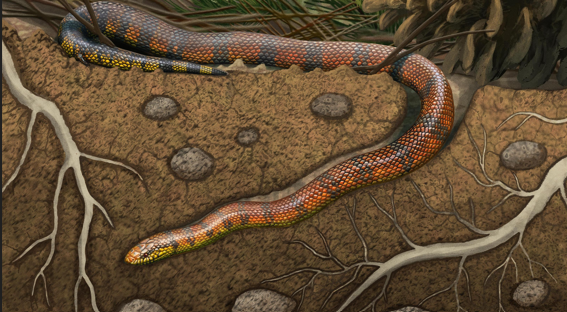
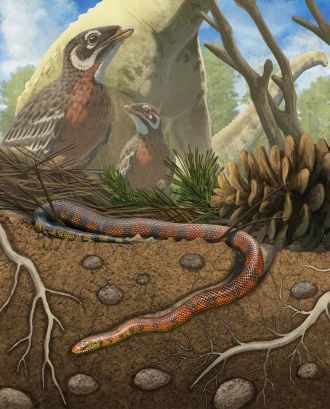
A newly identified snake species found in Brazil may be the earliest-known snake to have diverged from the stem line, according to research in Nature this week. The species, which dates to around 85–75 million years ago, seemed to be adapted for life underground in contrast to other known early snakes that lived above ground or in the water. The findings may prompt a rethink about the story of snake evolution.
The origin and early evolution of snakes is debated; they are thought to have originated around the Middle Jurassic (around 160 million years ago) and diversified during the Cretaceous. However, the habitat they evolved in is contested.
Tiago Simões, Annie Hsiou, and colleagues describe Tametara mirim, a newly identified snake species from the Late Cretaceous of southeastern Brazil. The specimen is a well-preserved, three-dimensional skull and body, and the first-known articulated snake fossil reported to be found in Brazil. High-resolution micro-CT scans reveal the intricate detail of its neuroanatomy, revealing skull shape features that indicate that T. mirim was a burrower. The snake’s brain was also quite different to that of other extinct and living snakes, suggesting there was a wide range of brain anatomy in early snake evolution.
These findings, according to the authors, suggest a far more dynamic picture of early snake evolution than was previously recognized. Early snake evolution, it seems, was not shaped by a single, linear event. Rather, it involved repeated shifts in habitat use and sensory ecology, reflecting a dynamic ecological history in which multiple lineages independently explored a variety of different lifestyles.
Multimedia

Attachments
Note: Not all attachments are visible to the general public. Research URLs will go live after the embargo ends.


