 Sign In



 New Zealand
News release
From:
Educators vital champions of te reo Māori
Early childhood educators in predominantly English-speaking centres play a role in preserving and promoting te reo Māori, a University of Otago study has highlighted.
Within the last decade there has been growing appreciation for the importance of te reo Māori in Aotearoa New Zealand.
Although early childhood settings have been recognised as integral for transmission of the language, there is limited research about its implementation in English-medium centres.
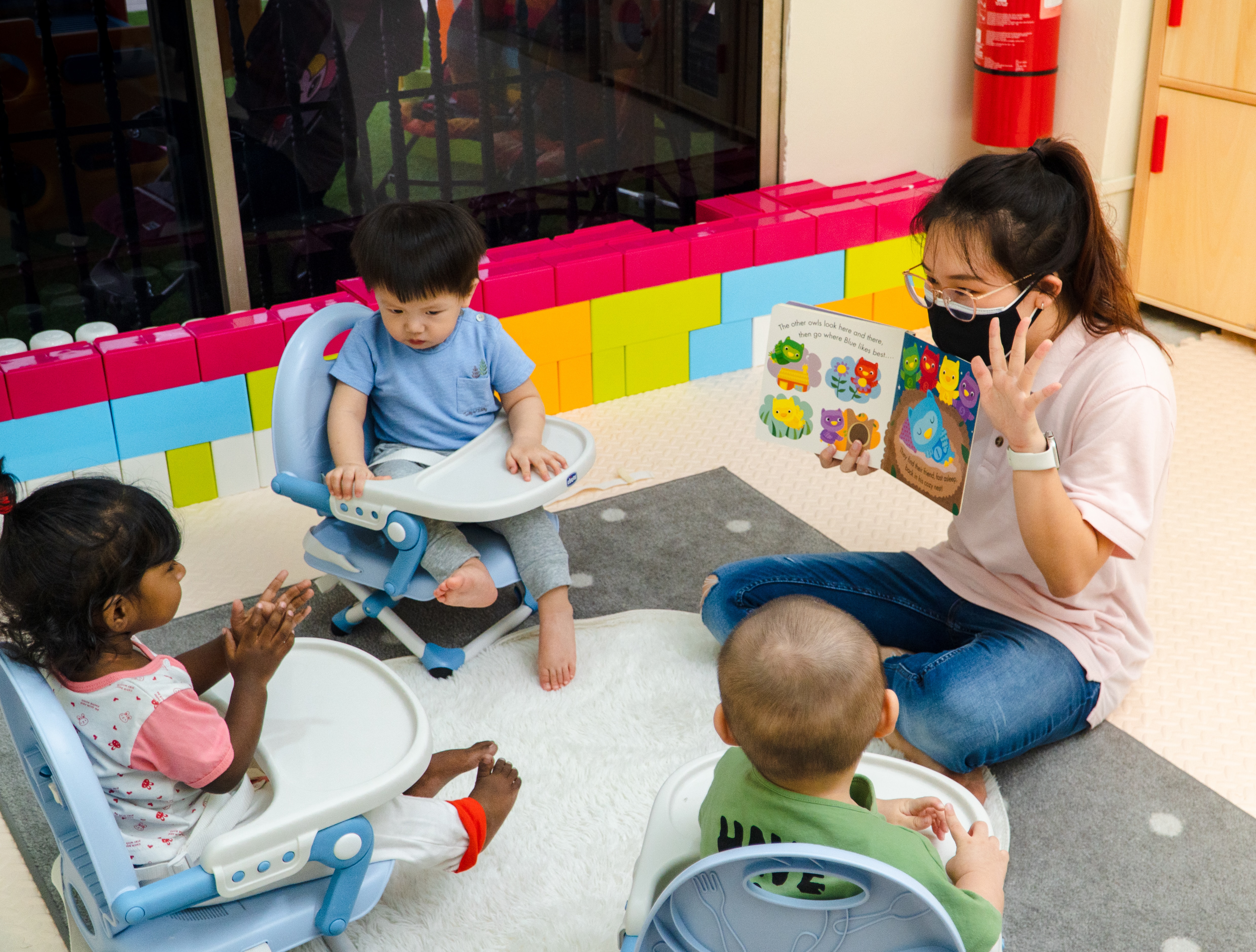
In a study, just published in the Journal of the Royal Society of New Zealand, researchers captured 25 minutes of natural interactions among kaiako (teachers) and tamariki (children) over five routines – kai time, book time, group time, free play time, and nappy change – at 24 early childhood centres across Aotearoa.
Lead author Yvonne Awhina Mitchell (Ngāti Awa, Ngāi Te Rangi), of Otago’s Department of Psychology, says they were interested in understanding the rate, quantity, and quality of te reo Māori used in the centres.
“We found the highest rates of te reo Māori per minute were observed during kai time, book time and group time routines. While te reo Māori was limited during the nappy change routine, this reveals a unique opportunity for educators to incorporate te reo Māori during these face-to-face interactions with one child only,” she says.
The use of te reo Māori was always initiated by educators, which shows the role they have in implementing te reo Māori and providing children an opportunity to respond to and return te reo Māori. Single words in te reo Māori (e.g., ‘Are you ready for your kai?’) were used more often in comparison to two and three or more words in te reo Māori.
“These simple words are a positive first step, as they provide a foundation for more complex language use. Although some centres used only a little, and others a great deal, it is heartening to know young learners in Aotearoa are hearing te reo Māori from a young age throughout the day.”
Co-author Dr Amanda Clifford (Waitaha, Kāi Tahu, Kāti Māmoe), also of the Department of Psychology, says the study emphasises how important educators are in implementing the use of the language in English-medium centres.
“Language development during early childhood is dependent on rich interactions with adults, so these findings not only support revitalisation efforts, but are in line with the national early childhood curriculum, Te Whāriki. Educators play a role in preserving and promoting te reo Māori, and their knowledge and skills are valuable in ensuring the language thrives,” she says.
The teachers self-reported proficiency in te reo Māori ranged from ‘beginner’ to ‘intermediate’, which highlights that they need to continue to be nurtured and supported in their language revitalisation efforts.
“For some, accessing resources, training, structured support and ongoing professional development opportunities may enable them to better develop their language skills to incorporate te reo Māori into their teaching.”
Mitchell says these types of oral language interventions would enable and encourage greater use of te reo Māori across all early childhood routines.
“There is an opportunity for more elaborate te reo Māori use in early childhood settings and language efforts should focus on how to shift speakers from simple phrases to the next level of language proficiency,” she says.
In future research, the same group of kaiako will be introduced to an innovative oral language intervention. The aim of this is to enhance rich interactions between educators and children to improve their oral language.
“This intervention also aims to specifically target and increase the use of te reo Māori and bilingual books within classrooms.”
*The researchers extend their heartfelt thanks to all BestStart Educare tamariki, whānau, and kaiako participating in Kia Tīmata Pai. Funding for the Kia Tīmata Pai main trial and the Video Project sub-study was from the Wright Family Foundation.
Contact: Jessica Wilson
Communications Adviser
University of Otago
Mob: 021 279 5016
Email: jessica.wilson@otago.ac.nz

