EXPERT REACTION: Drops in brain volume found in the brains of elite rugby players

Publicly released:
New Zealand; International
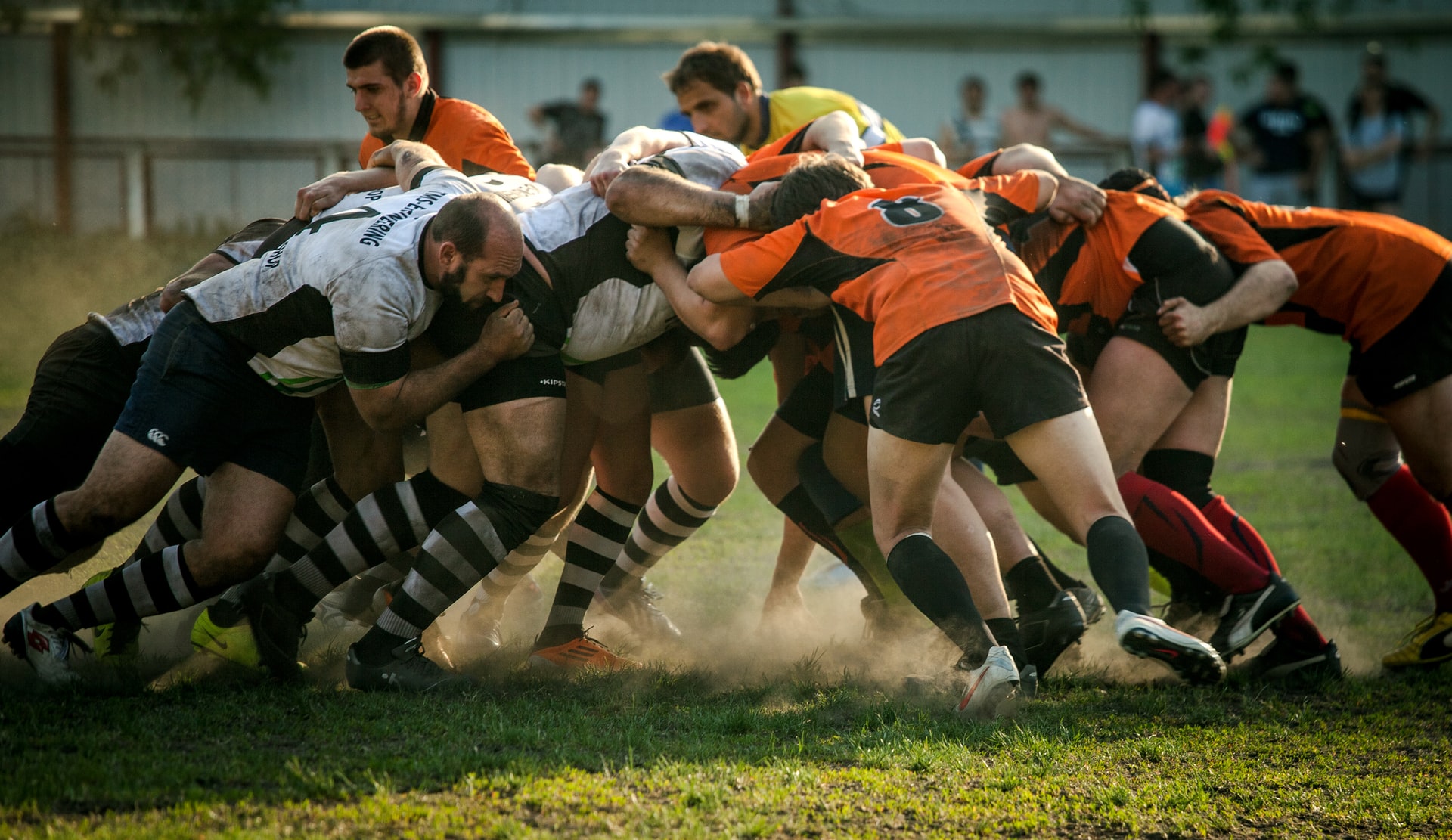
PHOTO: Olga Guryanova/Unsplash

Findings from a small UK study suggest there’s a link between playing rugby at an elite level and changes in brain structure. The research team used advanced MRI technology to study the brains of 44 rugby players, and compared them to other participants who either weren’t athletes or who played non-collision sports like swimming, cycling, and weight-lifting. The scans found brain injuries in almost a quarter of the rugby players, and that half of the rugby player group had unexpected reductions in the volume of their deep brain tissue. The researchers say more research is needed to clarify whether the abnormalities they found are related to an increased risk of neurodegenerative disease and impaired neurocognitive function after playing rugby at elite levels.

News release

From:

Expert Reaction

These comments have been collated by the Science Media Centre to provide a variety of expert perspectives on this issue. Feel free to use these quotes in your stories. Views expressed are the personal opinions of the experts named. They do not represent the views of the SMC or any other organisation unless specifically stated.

Dr Helen Murray, Centre for Brain Research, University of Auckland

There is growing concern that contact sport athletes are exposed to repeated head injuries that could have long-term effects, such as post-concussion syndrome and a form of dementia called chronic traumatic encephalopathy.

This study uses magnetic resonance imaging (MRI) to compare the brains of elite rugby players with control groups who do not play sport and who do not play a collision sport. 

While this is a small study, it provides preliminary evidence of changes to brain structure in a group of elite rugby players. These findings highlight the need for larger studies of more athletes with a longer follow-up to validate and understand these changes.

We are currently establishing the sports brain bank initiative as part of the Neurological Foundation Human Brain Bank at the Centre for Brain Research in Auckland. The findings of this study by Zimmerman et al, are very informative to our work investigating the presence of these brain changes in post-mortem human tissue.

Last updated:  23 Jul 2021 7:58am
Contact information
Contact details are only visible to registered journalists.
Declared conflicts of interest No conflict of interest

Attachments

Note: Not all attachments are visible to the general public. Research URLs will go live after the embargo ends.

Research Oxford University Press, Web page
Other Science Media Centre UK, Web page UK SMC Expert Reaction
Journal/
conference:
Brain Communications
Research:Paper
Organisation/s: Imperial College London, UK; UK Dementia Research Institute, UK; University College London, UK; See paper for full list of organisations
Funder: The Drake Rugby Biomarker Study was supported by the James Drake and The Drake Foundation. The research was also supported by a European Research Area Network (ERA-NET) grant (MR/R004528/1), National Institute of Health Research Professorship (NIHR-RP-011-048) and Medical Research Council through a Clinician Scientist Fellowship awarded to D.J.S., and by the National Institute of Health Research Clinical Research Facility and Biomedical Research Centre at Imperial College Healthcare NHS Trust. D.J.S. is also funded by the Care Research and Technology Centre, UK Dementia Research Institute and the Royal British Legion Centre for Blast Injury Studies. J.H. is supported by the UK Dementia Research Institute which receives its funding from Dementia Research Institute Ltd, funded by the UK Medical Research Council, Alzheimer’s Society and Alzheimer’s Research UK. N.G. was supported by an Alzheimer’s Research UK Clinical Research Fellowship (ARUK-CRF2017A-1). Competing interests: D.J.S. has received an honorarium from the Rugby Football Union for participation in an expert concussion panel, which was used to support his research. He has also received an honorarium from the Wellcome Trust. H.R.M. is employed by UCL. In the last 24 months, he reports paid consultancy from Biogen, UCB, Abbvie, Denali, Biohaven and Lundbeck; lecture fees/honoraria from Biogen, UCB, C4X Discovery, GE-Healthcare, Wellcome Trust and Movement Disorders Society; Research Grants from Parkinson’s UK, Cure Parkinson’s Trust, PSP Association, CBD Solutions, Drake Foundation and Medical Research Council. H.R.M. is a co-applicant on a patent application related to C9ORF72—Method for diagnosing a neurodegenerative disease (PCT/GB2012/052140). S.K. is employed as the Medical Services Director for the Rugby Football Union. All other authors have no competing interests.
Media Contact/s
Contact details are only visible to registered journalists.