 Sign In



 International
News release
From:
Little awareness of medical + psychological complexities of steroid cream withdrawal
Condition often poorly recognised, diagnosed, managed and researched, say report authors
This has prompted unfounded fears, particularly on social media, that all steroids are harmful
There is little awareness, particularly among clinicians, of the medical and psychological complexities of ‘topical steroid withdrawal’—the body’s adverse response to the prolonged use of these powerful creams to treat inflammatory skin conditions when they are either tapered or suddenly stopped—warn doctors in the journal BMJ Case Reports.
The condition, also known as ‘TSW syndrome,’ ‘steroid addiction,’ and ‘red burning skin syndrome,’ is poorly recognised, diagnosed, managed, and researched, say the report authors, one of whom speaks from direct experience.
This has prompted unfounded fears, particularly on social media, that all steroids are harmful and should be avoided in favour of other often untested, unproven remedies, they caution.
Steroid creams are widely used for the treatment of various inflammatory skin conditions, such as eczema and psoriasis, for which they are very effective, note the report authors.
They are available in 4 different strengths, ranging from mild to very strong.
But withdrawing treatment—particularly the stronger formulations—after protracted use can prompt a rebound flare-up of symptoms, which can be even more severe and debilitating than the original condition, they point out.
These symptoms can spread well beyond the original areas of treatment and additionally trigger insomnia and depression.
The underlying causes are only partially understood, while diagnosis can be tricky because of the highly variable presenting symptoms, they add.
In a bid to promote wider recognition of the syndrome, the report authors present a case exemplifying some of the challenges involved for both clinicians and patients.
The case involved a middle-aged woman with a history of atopic eczema since infancy that had been treated with varying strengths of steroid creams for sometimes lengthy periods.
She was referred to dermatology for review and explained that she had had a flare-up of symptoms which had persisted for 18 months until she was treated with a gradually tapering 4-week course of steroid tablets.
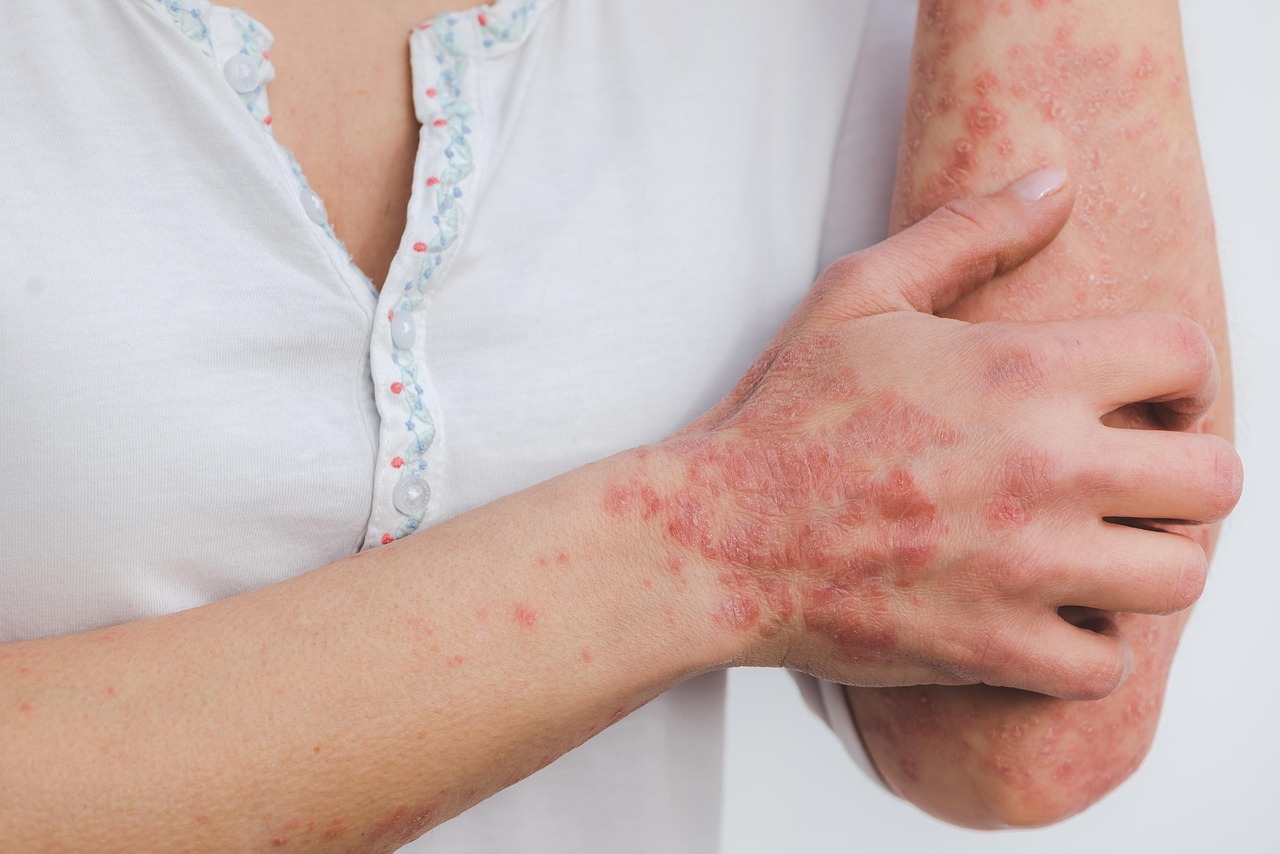
She had significant skin thinning, particularly on her arms, and thickened leathery skin (lichenification) in the folds of her elbows and wrists.
She was prescribed further steroid creams to ward off future flare-ups, which she decided to stop using a month after her review. Her skin symptoms then significantly worsened as did her general health.
She had widespread skin reddening and experienced a burning sensation and intense itching. Her skin became dry, scaly, thickened and cracked, exposing deep tears in parts.
She also reported swelling in the thighs, feet, ankles, and around the eyes and extensive skin folds and sagging. Systemic symptoms included dizziness, nausea, hair loss, insomnia, low blood pressure, extremes of temperature and sensations of dampness and numbness. She experienced intense nerve pain and sharp jolts of pain akin to an electric shock. Her symptoms were incapacitating.
She suspected topical steroid withdrawal. It took 28 months for her symptoms to resolve, during which time she decided against any further treatment, even skin moisturisers. She has since experienced occasional mild flare-ups but has not applied steroid creams.
Commenting on her experience, she explains that at times the severity and extent of her symptoms left her unable to get out of bed, and feeling like she might die.
She writes: “I should have liked to have been supported to withdraw safely. Without a diagnosis, this was not possible: I was being treated for eczema, which included continued steroid treatment. It is my understanding that TSW patients will not recover while steroids are part of their recovery plan.”
She continues: “I am pleased that more is now known about TSW, but I should like to see TSW diagnoses routinely being considered where steroids are no longer controlling a patient’s skin or when a patient simply feels that something is ‘different’ to usual. More than that, I should like to see TSW prevention a priority, so that there is no new generation of patients who have to endure the suffering that I have endured.”
The report authors acknowledge: “Despite the increasing recognition of TSW within the dermatological community, it remains underdiagnosed in routine practice. Patients often turn to online forums and self-treatment due to diagnostic challenges, which can lead to inconsistent or even harmful practices.”
They continue: “While social media has raised awareness for poorly recognised conditions like TSW, it has significantly contributed to steroid phobia. From our medical experience, exposure to alarming online narratives has led many patients to refuse [topical steroid] management of their conditions, both dermatological and otherwise, despite reassurance by clinicians about their safe and approved use.”
They conclude: “Breaking the cycle of distrust and enhancing patient care requires clinicians to address patients' concerns with empathy, prioritising patient education. By fostering open discussions about patients’ beliefs and perspectives while simultaneously providing evidence-based recommendations, clinicians can support well-informed decision making and improve treatment outcomes.
Attachments
Note: Not all attachments are visible to the general public. Research URLs will go live after the embargo ends.


