Sign In



 Australia; NSW; QLD
News release
From:
Medulloblastoma is the most common cancerous brain tumour in children, and fighting it requires an approach that is delicate, durable, and direct.
Now a group of researchers at UQ’s Australian Institute for Bioengineering and Nanotechnology (AIBN) believe they’ve got a new tool that’s perfect for the job.
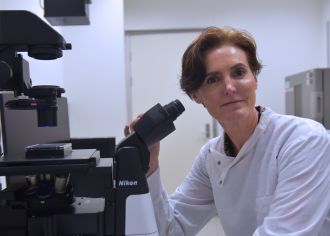
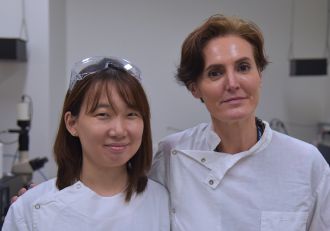
A fluoropolymer-engineered iron oxide nanoparticle developed by Dr Helen Forgham and Dr Ruirui Qiao could be the ideal vehicle to simultaneously treat, map and monitor the notoriously challenging to reach children’s brain cancer Medulloblastoma
This cancer develops at the base of the brain and receives inadvertent protection from the blood brain barrier, meaning regular treatment methods are often ineffective or cause severe side effects.
Dr Forgham and Dr Qiao say their new tool could help avoid damage to cells.
“The nanoparticles we have designed are small enough to carry therapeutics through the protective blood brain barrier, durable enough to make the journey to the tumour, and are made from materials that allow them to be picked up by imaging technology,” Dr Qiao said.
“What we have is something much more than a drug delivery device. It could change the way we approach the most common cancerous children’s brain tumour.”
In the esteemed journal Advanced Science, Dr Forgham, Dr Qiao and their collaborators demonstrate the groundbreaking benefits of their new nanoparticles and show why they could be the ideal multifaceted weapon against Medulloblastoma.
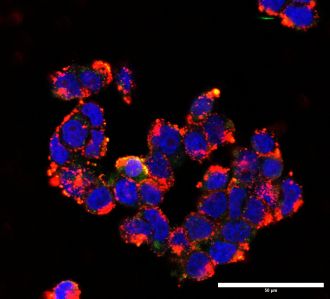
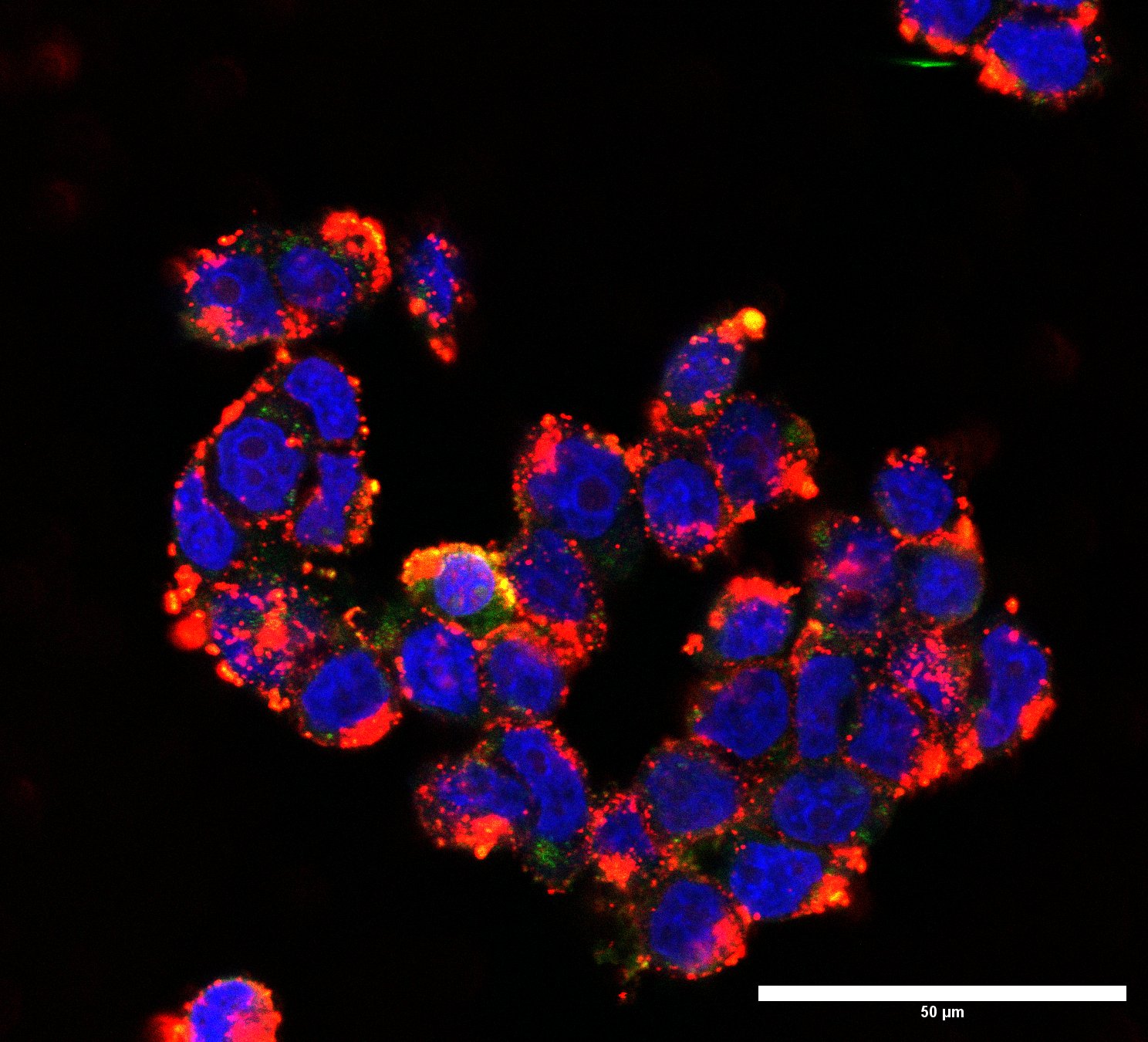
Dr Forgham says, notably, these nanoparticles are the ideal vehicle for delivering small interfering RNA (siRNA) directly to the brain cancer site, slowing tumour growth without causing signs of toxicity.
Crucially, an iron oxide core means the nanoparticles also double as an imaging tool.
“This iron oxide core means they can be picked up by imaging equipment to give us a closer view of the tumour site, as well as live information on how treatment is progressing,” Dr Forgham says.
“It’s a perfect demonstration of chemistry and biology working together – something you don’t often see, but something that was essential to solve a problem with its fair share of natural hurdles.”
Having demonstrated the potential of their discovery, the next step is taking the idea from the lab bench to the clinic.
“The goal is to translate these findings into a product that presents a gentler yet direct approach to treating cancerous tumours,” Dr Forgham said.
“And not just Medulloblastoma – but a wider range of cancers.”
The project was completed with the support of Professor Maria Kavallaris from the University of NSW, who is head of the Translational Cancer Nanomedicine Theme at the Children’s Cancer Institute in Sydney.
A wide cast of AIBN colleagues also added their expertise, including research group leaders Professor Tom Davis, Dr Cheng Zhang, and Professor Kris Thurecht.
Dr James Humphries, Dr Nicholas Fletcher, Dr Gary Cowin, Dr Karine Mardon and PhD scholars Jiayuan Zhu, Xumin Huang, Heather Biggs, Liwei Liu, and Yi Cheng Wang also played a key role.
Multimedia