 Sign In



 Australia; SA; WA; ACT
News release
From:
Supporting On-Farm Experimentation networks and activities globally to better connect farmers and researchers could help transform the agricultural industry and solve some of its toughest challenges, a international study led by Curtin University in partnership with Murdoch University and CSIRO has found.
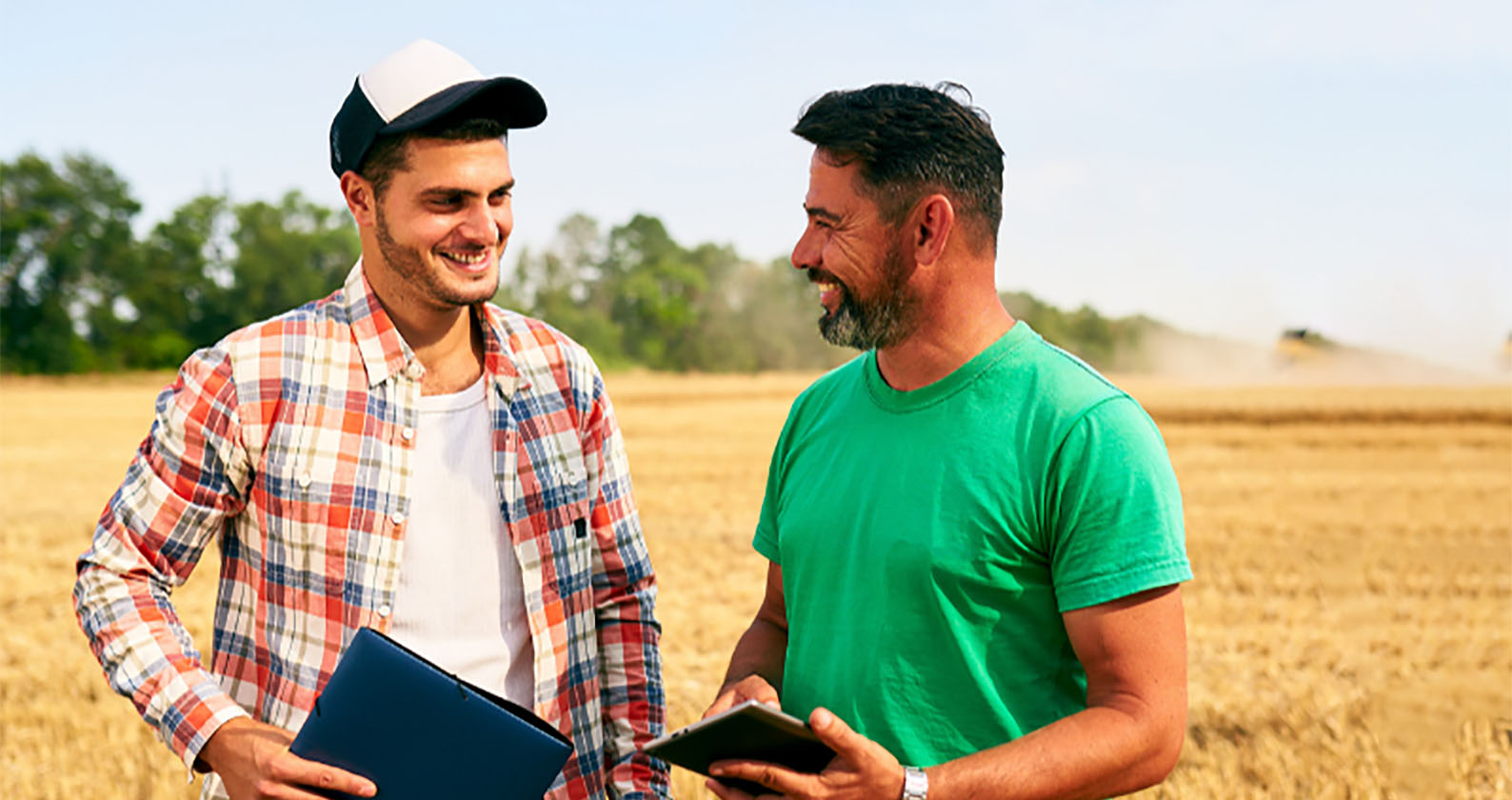
On-Farm Experimentation (OFE) refers to farmer-centric and data-driven approaches to agricultural innovation where farmers conduct their own experiments in their fields in collaboration with scientists and other industry professionals. It is a way for farmers to test technologies and practices by varying management, observing and measuring changes, and analysing results – all in real farm conditions, with a focus on what matters to each farm and field. OFE departs from a long tradition of agricultural research where results are meant to be independent from local conditions, and instead puts back farmers and their individual circumstances back at the heart of the research process.
The study, published in Nature Food, found that there is high demand internationally for this type of collaborative research.
Lead Curtin researcher Dr Myrtille Lacoste from Curtin’s Centre for Digital Agriculture said that the growing need for OFE can be attributed to both the motivation of farmers to learn by observing research results directly, and scientists’ own thirst for data.
“OFE places farmers back at the centre of innovation and gives them the opportunity to test and measure the effect of any technology or practices that matters to them, from fertiliser, crop variety or cultivation practice, with researchers and scientists providing guidance and expertise rather than leading the entire experiment,” Dr Lacoste said.
“The roots of OFE were pioneered decades ago but are only now gaining momentum worldwide. This has been supported by a growing demand for research practices that recognise farmers’ own role in innovation, and by the rise of digital technologies that facilitate experimentation.
“OFE brings forward experimentation as a force to innovate by building bridges between farmers, researchers and other stakeholders.”
“This powerful collaborative tool has the potential to transform agriculture if the people from around the globe who are first concerned are able to routinely add to the ways knowledge is built themselves, create new tools and harness different types of information in better ways – as opposed to simply receiving then adapting solutions developed elsewhere .”
Dr Lacoste said the success of the inaugural Conference on farmer-centric OFE held in 2021 with the support of the OECD Cooperative Research Program showed the depth and breadth of the international interest on this topic.
“We had 170 participants from 36 different countries networking and sharing ideas outside of their usual circles. OFE communities across the world are connecting, and we hope the results of this study will help bring international partners together,” Dr Lacoste said.
“OFE, ran by farmers, civil organisations, businesses, social enterprises and scientists, is very diverse and that’s a strength. International leadership would greatly help communication between groups, and progress the sciences supporting OFE.”
Co-author Dr Rob Bramley, Senior Principal Research Scientist (Precision Agriculture) with CSIRO, said there is growing momentum to rethink the relationship between farmers and scientific experimentation to drive meaningful impact.
“Over many years we’ve been successfully using the OFE approach in research, including for crop responses to fertilizer in WA and vineyard floor management and disease control. Farmers lead the investigation and make the observations, while researchers take on the role of supporter, providing data analysis and transferring the knowledge,” Dr Bramley said.
This study involved an international team of researchers spanning 24 research institutions across eight countries, including co-author Professor Simon Cook based at Murdoch University and the WA Premier’s Fellow of the Agriculture and Food Fellowship.
The full paper, titled 'On-Farm Experimentation to transform global agriculture', is available online here.

