Sign In



 International

News release
From:
To treat long COVID, we must learn from historical chronic illnesses, medical researchers say
In a paper publishing in the Cell Press journal Trends in Immunology on December 4, scientists and doctors highlight the importance of studying long COVID in the context of other post-acute infection syndromes or chronic illnesses. By analyzing historical accounts of other epidemics, they say, researchers can gain important perspective on the profound effects of these chronic illnesses—with the goal of informing more effective interventions for treating them.
“Post-acute infection syndromes are a long-overlooked but important area of medicine, and long COVID represents a contemporary manifestation of a phenomenon that’s been described for over a century,” says co-author Christine Miller of Yale School of Medicine.
“Recognizing that these conditions are not new reframes long COVID within a broader historical and biological context and emphasizes the urgent need to understand their mechanisms.”
Across history, infectious disease outbreaks—from influenza to polio—have led to subsets of patients with persistent, often unexplained symptoms. These symptoms range widely and include severe fatigue, shortness of breath, neurocognitive and sensory symptoms, and muscle and joint pain. For many people, these symptoms are debilitating, note the authors, and the mechanisms that trigger them remain unclear.
“The greatest challenge to developing treatments for long COVID is understanding the underlying pathobiology,” says co-author Janna Moen of Yale University School of Medicine. “Several hypotheses exist, from viral persistence to immune dysregulation. But without a better understanding, diagnostic tests and targeted therapies are difficult to design.”
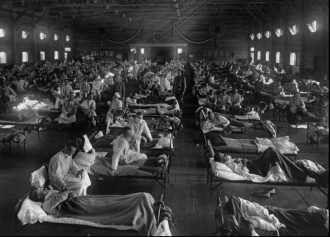
To gain insight, the authors investigated major epidemics throughout modern history where symptoms of post-acute infections were well documented, including influenza outbreaks of the late 19th and early 20th centuries. The goal was not to be exhaustive, but to illustrate a clear, recurring pattern across pathogens and time that highlights shared features of post-acute infection syndromes.
“One surprising finding was how closely historical descriptions of post-influenza exhaustion from the 1889–1890 epidemic mirror modern accounts of long COVID,” says Miller. “Reading physicians’ notes from that era felt almost indistinguishable from today’s clinical reports.”
“We were also surprised to find how frequently children were affected,” Miller continued. “These syndromes are often discussed in the context of adult illness, but historical accounts highlight that pediatric populations are also vulnerable to these long-term effects.”
The authors are investigating leading hypotheses about the mechanisms of post-acute infection syndromes with a multi-pronged approach, using results obtained from diverse patient cohorts, biospecimens, and animal models. By integrating clinical data with mechanistic studies, they aim to identify pathways that could be targeted for disease prevention or treatment across post-acute infection syndromes.
“We hope this paper raises awareness about the prevalence and continuum of post-acute infection syndromes preceding long COVID,” says co-author Akiko Iwasaki of Yale University School of Medicine. “By situating long COVID within the history of post-infectious illnesses, we aim to reduce stigma and encourage coordinated efforts to develop effective treatments.”
Multimedia