 Sign In



 Australia; VIC
News release
From:
Brain’s “tumour hotspots” uncovered in breakthrough Peter Mac research
New research from Peter Mac has uncovered why some parts of the brain may be more vulnerable to tumour growth than others, offering new clues into how brain cancers begin and how they could one day be stopped.
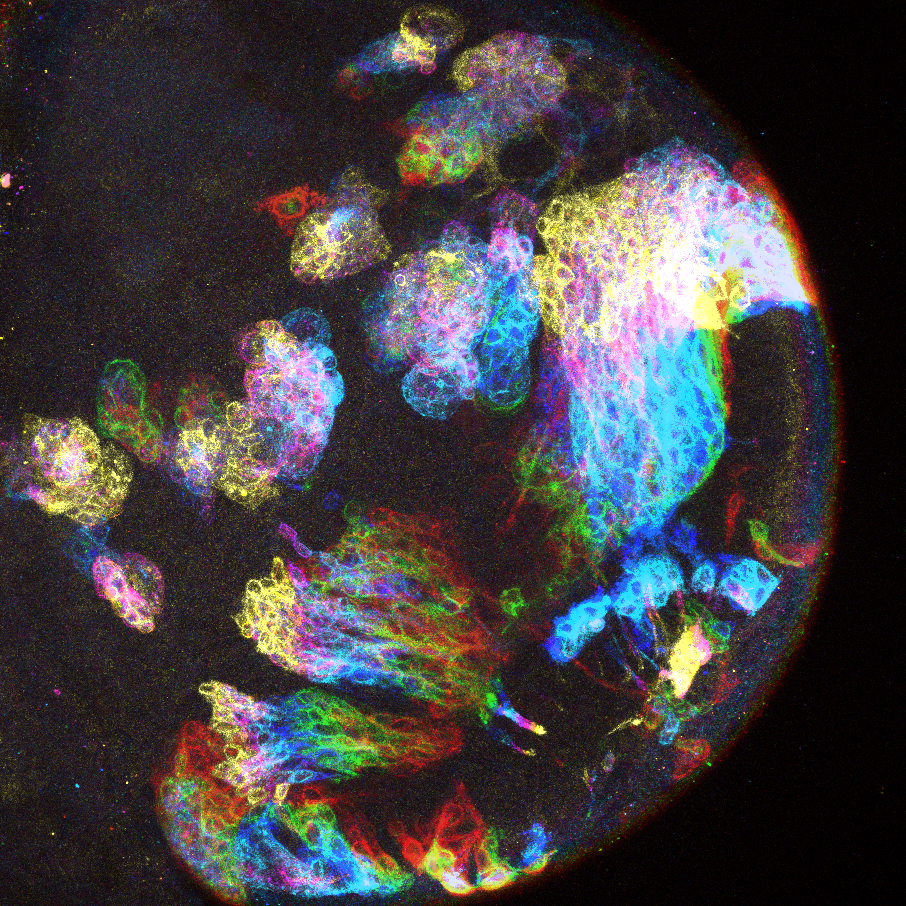
Published in the journal Proceedings of the National Academy of Sciences (PNAS), the research by Professor Louise Cheng’s lab, used fruit fly models to investigate why cancer-causing mutations can lead to tumours in some regions of the brain and not in others.
This work, led by Dr Khanh Nguyen, investigated why tumours occur more frequently in certain parts of the brain and what conditions are present to make tumour formation easier.
The study identified a protein called “Chinmo” as a critical factor that determines whether brain cells carrying cancer mutations can grow into tumours in fruit flies.
“Mutations linked to cancer happen in our bodies all the time, but most never become dangerous because the body detects and removes those abnormal cells,” Professor Cheng said.
“What we wanted to understand was why some cells escape the process and develop into tumours, particularly in specific regions of the brain.”
The team discovered that when mutations occur in areas of the brain where Chinmo is active in fruit flies, the cells are far more likely to become cancerous. In regions where Chinmo is absent, the same mutations fail to result in tumours.
The researchers were able to switch tumour growth on or off in the flies simply by controlling Chinmo levels.
“We found we could change the fate of cells carrying the exact same mutation by turning Chinmo on or off,” Professor Cheng said.
The study also revealed that Chinmo is regulated by a steroid hormone involved in brain development, showing how developmental timing and hormonal signals work together to influence whether cancer forms.
“Our findings tell us that tumour formation is not only about the mutation itself, but is also influenced by the environment and developmental state of the cells, where the mutation occurs.”
The findings help explain why some regions of the brain are more susceptible to cancer than others.
Professor Cheng said the discovery could help researchers identify similar ‘competence factors’ in humans that allow cancers to take hold.
“Understanding these factors gives us a way of thinking about cancer formation beyond mutations in humans,” she said.
“If we can identify the conditions that allow mutated cells to become tumours, we may be able to target those conditions therapeutically and stop cancer before it develops.”
The research was conducted in collaboration with Associate Professor Owen Marshall from the Menzies Institute for Medical Research and Associate Professor Tony Southall from Imperial College London.

