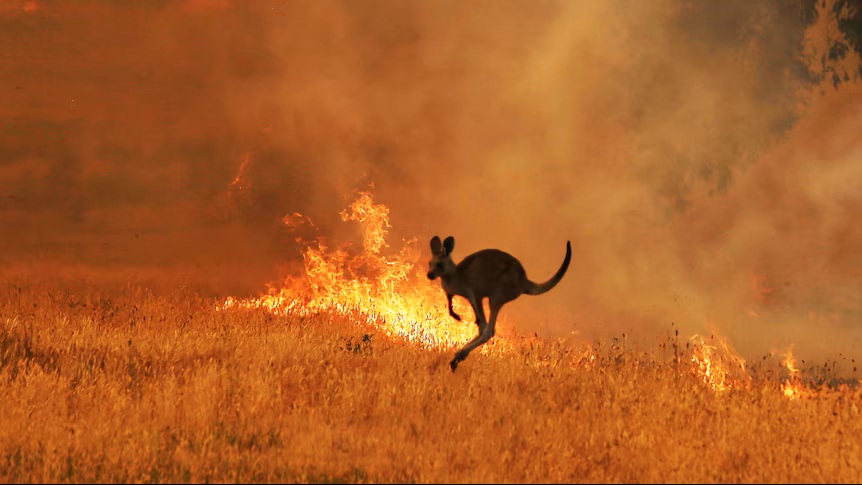
Black summer bushfires did not convince sceptical Aussies that climate change is real

Publicly released:
Australia; International; VIC; WA
Credit: ABC News: James Carmody

Australian and UK researchers say the devastating Black Summer Bushfires of 2019-2020 did nothing to convince undecided or sceptical Australians that climate change is happening, was to blame for the fires, and poses a serious threat to our future. They analysed three national surveys conducted before and after the fires to see if there were any changes in Australians' climate-related opinions. They found no increase in climate change acceptance or concern following the fires. Instead, many Aussies, especially those undecided or sceptical about global warming, blamed the fires on mass arson rather than climate change, a view they say was likely influenced by media coverage. The findings highlight how misinformation can influence public responses to extreme events, the authors conclude.

News release

From: The Royal Society

Do weather-related extreme events influence climate-related opinions? The case of the 2019-2020 Australian Black Summer bushfires

Australia's 2019–2020 Black Summer bushfires were unprecedented in scale and impact, raising questions about whether such extreme climate events change public views on climate change. We analysed three national surveys conducted before and after the peak of the fires to examine changes in Australians' climate-related opinions. We found no increase in climate change acceptance or concern following the fires peak. Instead, many Australians, especially those undecided or sceptical, attributed the fires to mass arson rather than climate change, a view seemingly shaped by media narratives. These findings highlight how misinformation can influence public responses to extreme events.

Attachments

Note: Not all attachments are visible to the general public. Research URLs will go live after the embargo ends.

Research The Royal Society, Web page The URL will go live at some point after the embargo ends
Journal/
conference:
Royal Society Open Science
Research:Paper
Organisation/s: CSIRO, The University of Western Australia, The University of Melbourne, Lancaster University, UK
Funder: This research was supported by Australian Government Research Training Program (RTP) Scholarship from the University of Western Australia and a scholarship from the Commonwealth Scientific and Industrial Research Organisation Research Office awarded to M.A.
Media Contact/s
Contact details are only visible to registered journalists.