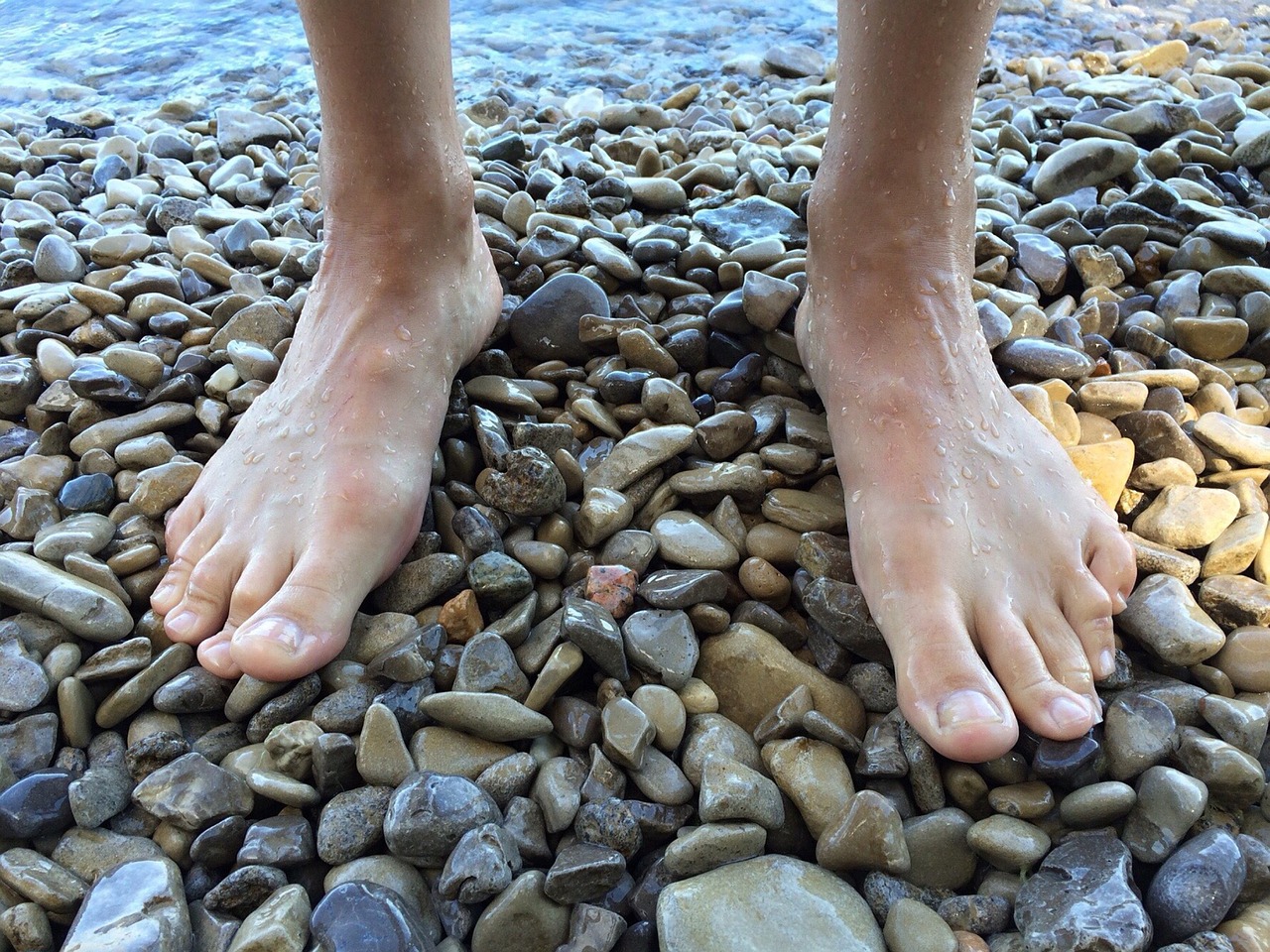
Big feet aren't the same as little feet

Publicly released:
Australia; QLD
Image by WOKANDAPIX from Pixabay

You know what they say about big feet? Big feet, a more cube-like heel bone! At least that's what Australian researchers have found, after looking at 36 pairs of feet. The researchers were trying to see if bigger feet are just scaled-up versions of smaller feet, or if they change shape to offset the higher joint and bone stress in taller people. They found that the heel bone (calcaneus), and the joint between the ankle bone and heel bone (the sub-talar joint), varied in shape as feet got bigger. Specifically, they found that the joint surfaces of the heel bone grew faster than the bone itself, and the bone became more cube-like in big feet. They also found the joint between the ankle bone and heel bone was larger in bigger feet. They say the findings reveal that the human foot has unique ways of adapting to size that may ensure safe loading within the foot, across a range of skeletal sizes.

Media release

From: The Royal Society

Mitigating Stress: Exploring how our feet change shape with size

Royal Society Open Science

Our study explored how human foot bones change shape with increasing size, to mitigate relatively higher joint and bone stress in larger individuals. We identified specific size-related shape features in human foot bones that may serve to reduce bone and joint stress. Specifically, the joint surfaces of the calcaneus grow faster than the bone itself, while the bone becomes more cube-like as the bone and subtalar joint get larger. Our findings reveal that the human foot has unique ways of adapting to size that may ensure safe loading within the foot, across a range of skeletal sizes.

Attachments

Note: Not all attachments are visible to the general public. Research URLs will go live after the embargo ends.

Research The Royal Society, Web page Please link to the article in online versions of your report (the URL will go live after the embargo ends).
Journal/
conference:
Royal Society Open Science
Research:Paper
Organisation/s: The University of Queensland, Griffith University
Funder: MR is funded by the Natural Sciences and Engineering Research Council of Canada Discover Grant (RGPIN/04880-2022) and LK by the Australian Research Council Discovery Early Career Research Award (DE200100585).
Media Contact/s
Contact details are only visible to registered journalists.