 Sign In



 International
News release
From:
Bacterial supplements may boost female fertility
As women get older, their uterine environment changes. This includes a decrease in a beneficial bacterium called Lactobacillus gasseri, which may make conception—whether natural or via in vitro fertilization—difficult. In a study publishing in the Cell Press journal Cell Host & Microbe on August 6, researchers show that treating mice and humans with L. gasseri supplements or derived postbiotics may improve fertility among women over the age of 35.
“Reproductive aging has traditionally been attributed mainly to a diminished ovarian reserve and reduced embryo quality,” says corresponding author Rong Li, a physician at Peking University Third Hospital in Beijing, China. “However, successful pregnancy also depends on a healthy and receptive endometrium.”
The endometrium is the inner lining of the uterus where a fertilized egg implants during pregnancy. Li’s team analyzed the endometrial samples of 149 women aged 20 to 45 who were being treated for infertility. They divided patients into three groups: under 30, 30 to 35, and over 35. The youngest patients had a significantly higher abundance of Lactobacillus bacteria than the other two groups. Specifically, the team observed that L. gasseri declined with age.
“One finding that surprised us was that overall microbial diversity did not change markedly across the different age groups,” Li says. “Instead, the major differences involved particular bacterial species.”
When the researchers followed up with the participants one year later, 93 of the women had received embryo transfers, which had resulted in 56 clinical pregnancies. Pregnancy rates did not differ significantly among the three age groups. However, the pregnant women had a higher endometrial abundance of Lactobacillus than their non-pregnant peers.
Further testing revealed that among five different Lactobacillus strains present, L. gasseri best supported endometrial health by demonstrating antioxidant and anti-inflammatory properties. This strain also had the strongest adhesion to endometrial cells.
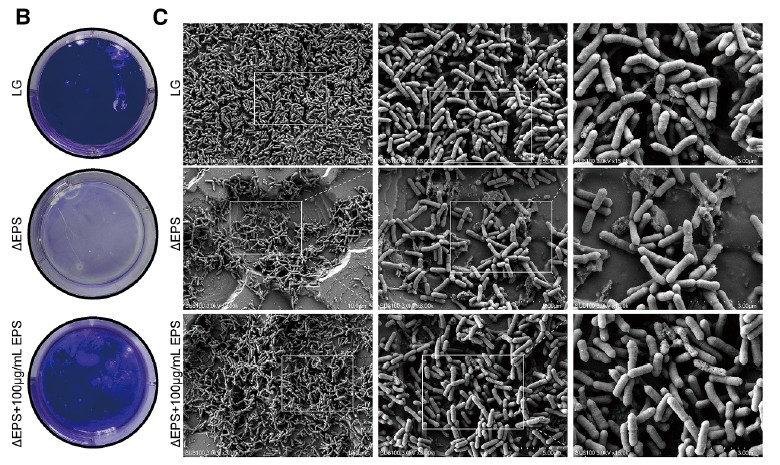
The researchers then examined human endometrial stromal cells, a type of connective tissue cell, to show that a specific component of L. gasseri called exopolysaccharides (EPS) helps protect against endometrial aging. In mouse models, older mice had higher embryo implantation rates when treated with EPS derived from L. gasseri.
“This suggests that a defined bacterial product, rather than only the living microorganism, may contribute to the observed effects on endometrial aging and receptivity, providing more feasible options for clinical intervention,” Li says.
In other words, the uterus could be easier to target than eggs or embryos for postbiotic treatment. Still, Li cautions women against self-medication with over-the-counter L. gasseri products, which have not been validated to treat infertility. She also says that more research is needed, and this study alone cannot prove that changes in the uterine microbiome cause endometrial aging or adverse pregnancy outcomes.
“Female reproductive aging is a multidimensional process,” Li says. “The health of the endometrium and its local microbial environment deserves greater attention. Although this is an early-stage study, we are still very excited about its clinical potential to improve female fertility.”
###
This work was supported by the National Key Research and Development Program of China, National Natural Science Foundation of China, and National Key Research and Development Project of China.
Attachments
Note: Not all attachments are visible to the general public. Research URLs will go live after the embargo ends.


