 Sign In



 Australia; SA; ACT
News release
From:
Ever wondered why birds are born to peep, chirrup and sing? Surprisingly, Australian avian experts have shown this to be true, literally, after finding fluctuations in bird species’ heartbeat responses to their parents’ calls – from inside the egg.
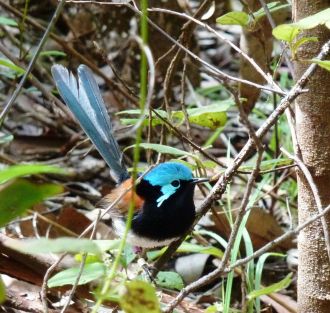
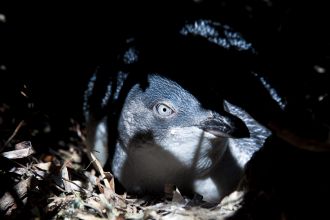
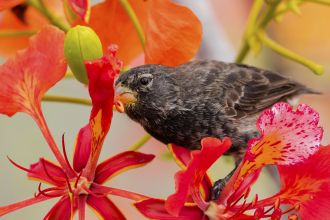
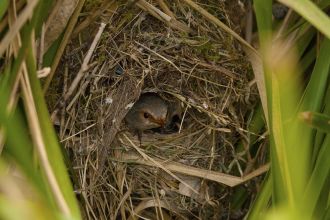
Using non-invasive techniques, Flinders University’s BirdLab research group found evidence of prenatal auditory learning in embryos of three vocal learning species (Superb fairy-wren, red-winged fairy-wren and Darwin’s small ground finch) and two vocal non-learning species (little penguin and Japanese quail).
“Vocal production learning is only believed to occur in seven lineages of birds and mammals, including humans,” says senior scientist Flinders Professor Sonia Kleindorfer, who is also based at the University of Vienna.
“This research will hopefully inspire more study into the remarkable capacity of animals to learn sound,” Professor Kleindorfer says.
“By moving the time window for sound learning to the prenatal stage, this research direction opens pathways to measure neurobiological downstream effects of early auditory experience on behaviour and information processing.”
The Flinders University researchers measured the vocal learning concepts in embryo behaviour and response to sound in ovo using change in heart rate as the response variable - well before birds hatch and start making complex calls or songs several months or even years after birth.
“By studying the capacity for sound learning in embryos, we are paving the way to new inroads into evolutionary and developmental timescales,” says first author in a new Royal Society publication Dr Diane Colombelli-Négrel.
“Long before actual vocalisation, we found that these tiny songbirds were also discriminating towards non-specific sounds and capable of ‘non-associative’ (not from parents) sounds, building on the complexity of vocal learning in songbirds.”
Professor Kleindorfer says there are many forms of vocal learning but vocal production learning by far stands out as a hallmark achievement in just seven Orders (primates, songbirds, parrots, hummingbirds, cetaceans, pinnipeds, bats), and among primates, “only humans can do it”.
“As a result of the rarity of vocal production learning, animals have been grouped into so-called ‘vocal learners’ (those that learn to imitate a vocalisation from a vocal tutor) and ‘vocal non-learners’ (animals that produce vocalisations without imitating a vocal tutor)."
Notably, the study’s focus on whether embryos could habituate or grow accustomed to another bird’s call found this was common to both vocal learning and non-learning bird species and may be more widespread than previously thought.
The BirdLab group is how exploring in-nest calling by mothers in seven fairy-wren and grasswren species. Each female produces variable combinations of vocal elements, each species has different combinations of element types during the calls, and some vocal element combinations are better at eliciting sound learning in embryos, the research indicates.
The paper, Prenatal auditory learning in avian vocal learners and non-learners (2021) by D Colombelli-Négrel, ME Hauber, C Evans, AC Katsis, L Brouwer, NM Adrean and Sonia Kleindorfer has been published in Philosophical Transactions Royal Society B DOI: 10.1098/rstb.2020.0247
Multimedia


Attachments
Note: Not all attachments are visible to the general public. Research URLs will go live after the embargo ends.


