 Sign In



 Australia; International; NSW; WA
News release
From:
Winners of the 2026 Nature Scientist at Work competition
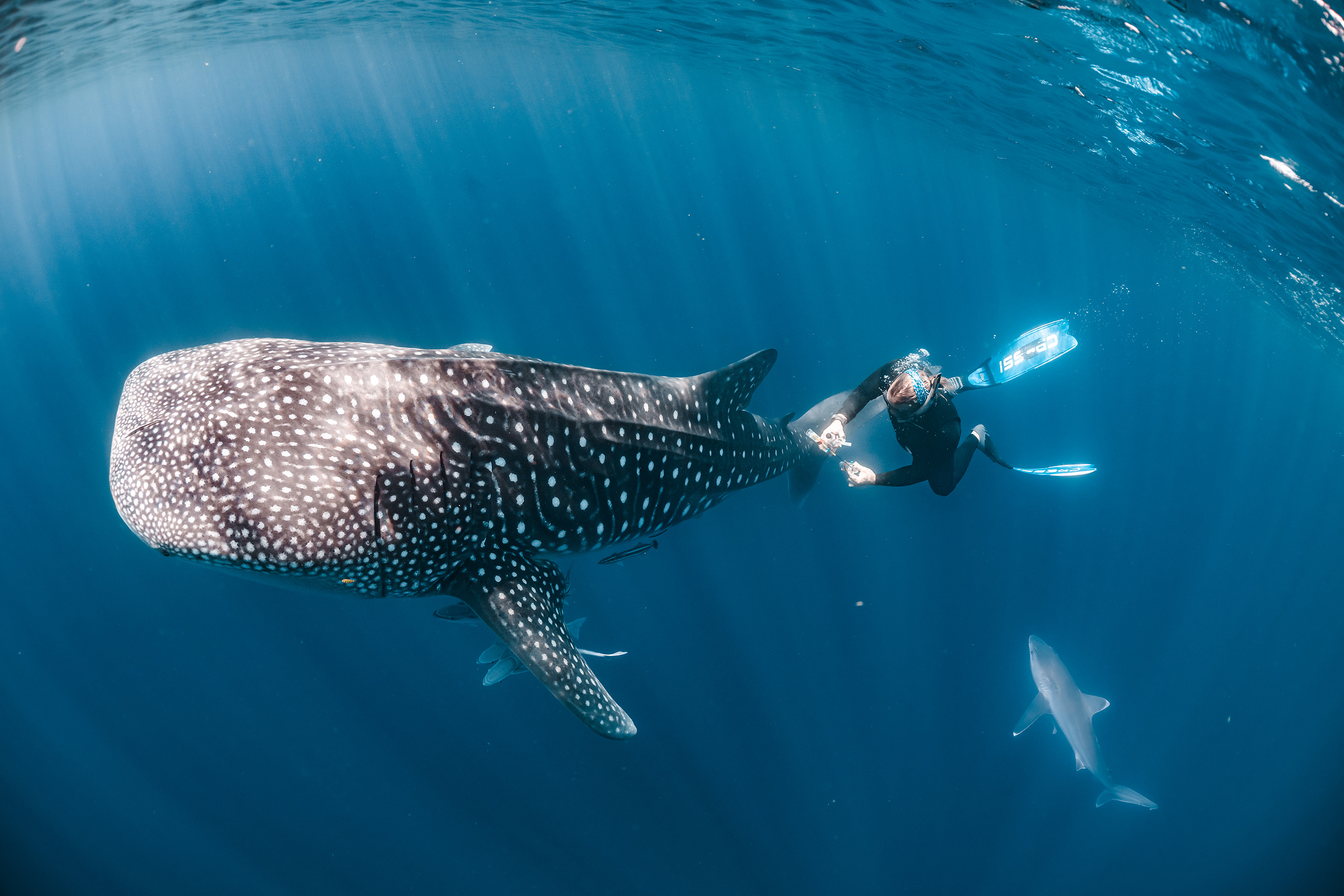
Two researchers guiding a flock of northern bald ibis (Geronticus eremita) on their migration across the fields of Jaén in the south of Spain is the overall winning image of Nature’s 2026 Scientist at Work photography competition. Whale sharks, algal blooms, and mosquito experiments also feature among five spectacular images showcasing the diversity and challenges of scientific research.
Now in its seventh year, the competition aims to capture the worldwide realities of scientific work both in the laboratory and the field. Winners are selected by a panel of Nature staff.
This year’s competition saw more than 220 entries from scientists across the world. The winning image was taken by Gunnar Hartmann, an undergraduate student in BioGeoSciences at the University of Koblenz, Germany. In 2024, he joined the Waldrappteam, an Austrian conservation group supporting the reintroduction of bald ibis into Europe, on a 50-day migration journey from southeastern Germany to southwestern Spain.
The birds are hand-raised by their human caregivers, forming a bond that means they are happy to follow their foster parents in an aircraft, who guide them along the way with calls and shouts. “There are so many emotions for me,” Hartmann says, about the image. “I can smell the air from this day and imagine the sounds”.
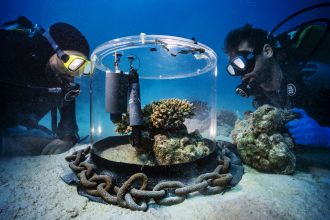
Another winning image is that of freelance marine biologist Uli Kunz of Kiel, Germany, who captured the installation of an incubation chamber at the “coral probiotics village,” a project in the Red Sea off the coast of Saudi Arabia. The project aims to investigate how different coral species are adapting to the rising water temperatures caused by climate change. “In this photo, I wanted not only to capture the research divers in the midst of their often-hectic work, but also to show a moment of quiet contemplation,” says Kunz.
Also featured among the competition winners is a striking photograph taken via drone, by Haolun ‘Allen’ Tian, of a research team collecting water samples from a Canadian lake overrun by bright green algal bloom. Marine ecologist Robert Harcourt captured an image of Michael Doane, a marine biologist, collecting a microbiome sample from a whale shark (Rhincodon typus) off the coast of Western Australia.
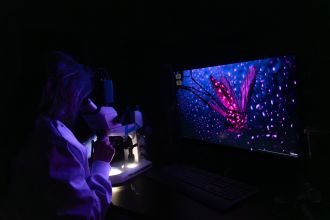
The final wining image, by Shayanta Chowdhury, is of entomologist Lee Haines viewing a yellow fever mosquito (Aedes aegypti) under an ultraviolet light in a laboratory at the University of Notre Dame, Indiana, USA. “The UV illumination created striking colours from both the tiny mosquito and the condensation that formed beneath the cold Petri dish,” Chowdhury, a chemistry PhD student, explains.
Multimedia

Attachments
Note: Not all attachments are visible to the general public. Research URLs will go live after the embargo ends.


