 Sign In



 Australia; NSW
News release
From:
Finding Nemo: AI tech could spot smuggled seahorses in suitcases
New automatic detection algorithm integrates into 3D scanners to help catch marine wildlife trafficking in luggage
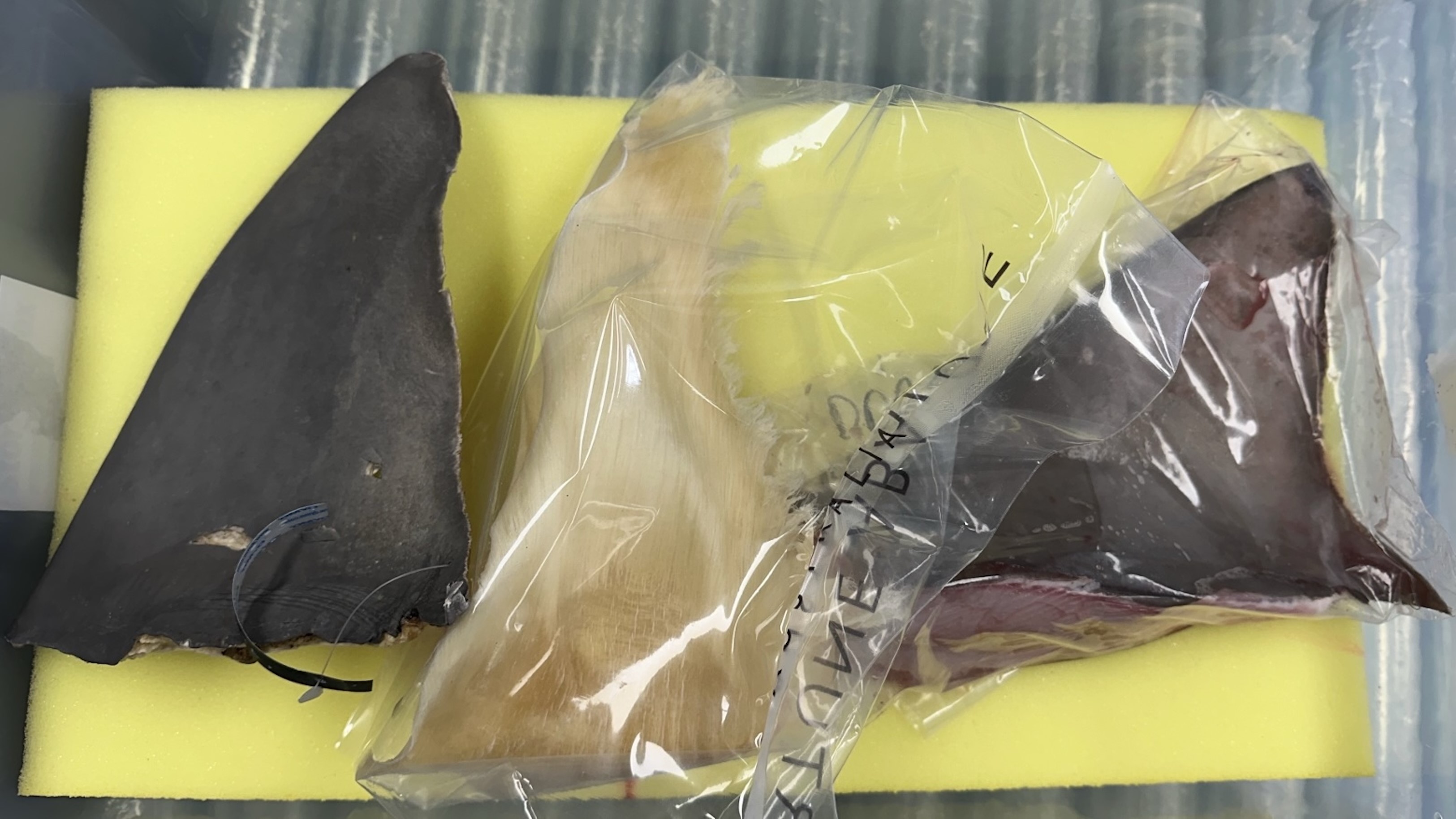
Marine wildlife trafficking is big business, raking in billions of dollars every year and threatening species’ survival and the health of ecosystems. But trafficked sea creatures are often concealed in ordinary travelers’ luggage or packages, which makes it hard to spot and seize illicit shipments. Now scientists have used a neural network, a form of AI, to teach an algorithm to spot three commonly trafficked products — shark fins, sea cucumbers, and dried seahorses — in CT scans of bags like those taken at airports. The algorithm, which had a 92% success rate in testing, could help detect marine wildlife trafficking at scale and stop the trade in progress.
When we think of wildlife trafficking, we might think of rhino horns or baby orangutans sold as pets — but the smuggling of sea creatures, a less well-known crime, is just as damaging to marine ecosystems. Unfortunately, many commonly smuggled marine wildlife items, like shark fins, can be hidden in baggage or parcels and carried across borders with relative ease, without being detected. To get round this, scientists used AI to develop an algorithm which can detect samples of commonly-trafficked sea creatures — shark fins, seahorses, and sea cucumber — with 92% accuracy.
“The trade of wildlife is cruel and unethical,” said Dr Vanessa Pirotta of Macquarie University, lead author of the article in Frontiers in Ocean Sustainability. “For many, this may be the first people have heard of illegal trafficking of marine wildlife. Wildlife trafficking does not just target the species we are most familiar with, like rhino horn or ivory from elephants. We’re using this World Oceans Day to bring this issue to the surface.”
Danger at sea
The illegal trade of marine wildlife is thought to be worth billions every year, and it poses a significant threat to endangered animals. The transport of animals for food, medicine, ornaments, or the pet trade threatens the survival of precariously balanced populations, while animals which are trafficked alive could escape and become invasive species in other ecosystems. But detecting trafficking in progress is easier said than done, which makes it hard not just to stop the trade but to quantify its impact on the environment.
The team repurposed existing X-ray CT scanners, which are already used at many airports to catch explosives or biosecurity threats. These scanners take many X-rays of a single object, creating a 3D image of the contents. By using a neural network to train an algorithm which could recognize commonly-smuggled species in these images, the scientists hoped to create a system which can automatically flag bags for investigation.
The scientists chose to work on shark fins, seahorses, and sea cucumbers. Shark fins are in high demand for food, while dried seahorses are traded for traditional medicine. Sea cucumber smuggling is less frequently recorded, although we know sea cucumbers are often illegally overfished; the researchers believe that sea cucumber smuggling is more common than we can currently prove.
They made a total of 298 scans from 20 sea cucumber samples, 30 seahorse samples, and 18 shark fin samples, many of which came from wildlife trafficking seizures. Five different scans were created for each sample in different positions and contexts, plus scans containing multiple different samples. The scientists also scanned samples in conditions which mimic smugglers’ tricks — wrapping them in tin or clothes, or hiding them in children’s toys — and added some of their scans to CT images of bags that had been scanned without any smuggled goods, a technique called Threat Image Projection. This helps mimic real-life circumstances, where samples can be found hidden in luggage.
The scientists used these images to train the algorithm to recognize the shark fins, sea cucumbers, and seahorses, and then tested the algorithm on a subset of images it had never been given before.
Running the numbers
The algorithm was 92% successful overall: 95% successful at detecting shark fins, 96% successful at detecting seahorses, and 86% successful at detecting sea cucumbers. The false positive rate was 13%: 2% for shark fins, 1% for sea cucumbers, and 9% for seahorses. This high accuracy rate suggests that this automatic detection algorithm could be a powerful tool to catch shipments that are currently getting past existing controls, helping to cut off trade routes and secure convictions for people who traffic marine wildlife.
But a successful automatic detection program for these species is only part of the answer. Many other species are also trafficked, and false positives will still need to be manually checked. Additionally, not every airport has access to 3D CT scanners, which are expensive: others are still dependent on 2D scanners. Automatic detection will complement existing detection methods rather than replacing them.
“We can only mock up real-world trafficking scenarios based on what has been detected before,” said Pirotta. “AI is not a silver bullet for detection, nor a replacement for human and sniffer dog detection.”
Attachments
Note: Not all attachments are visible to the general public. Research URLs will go live after the embargo ends.


