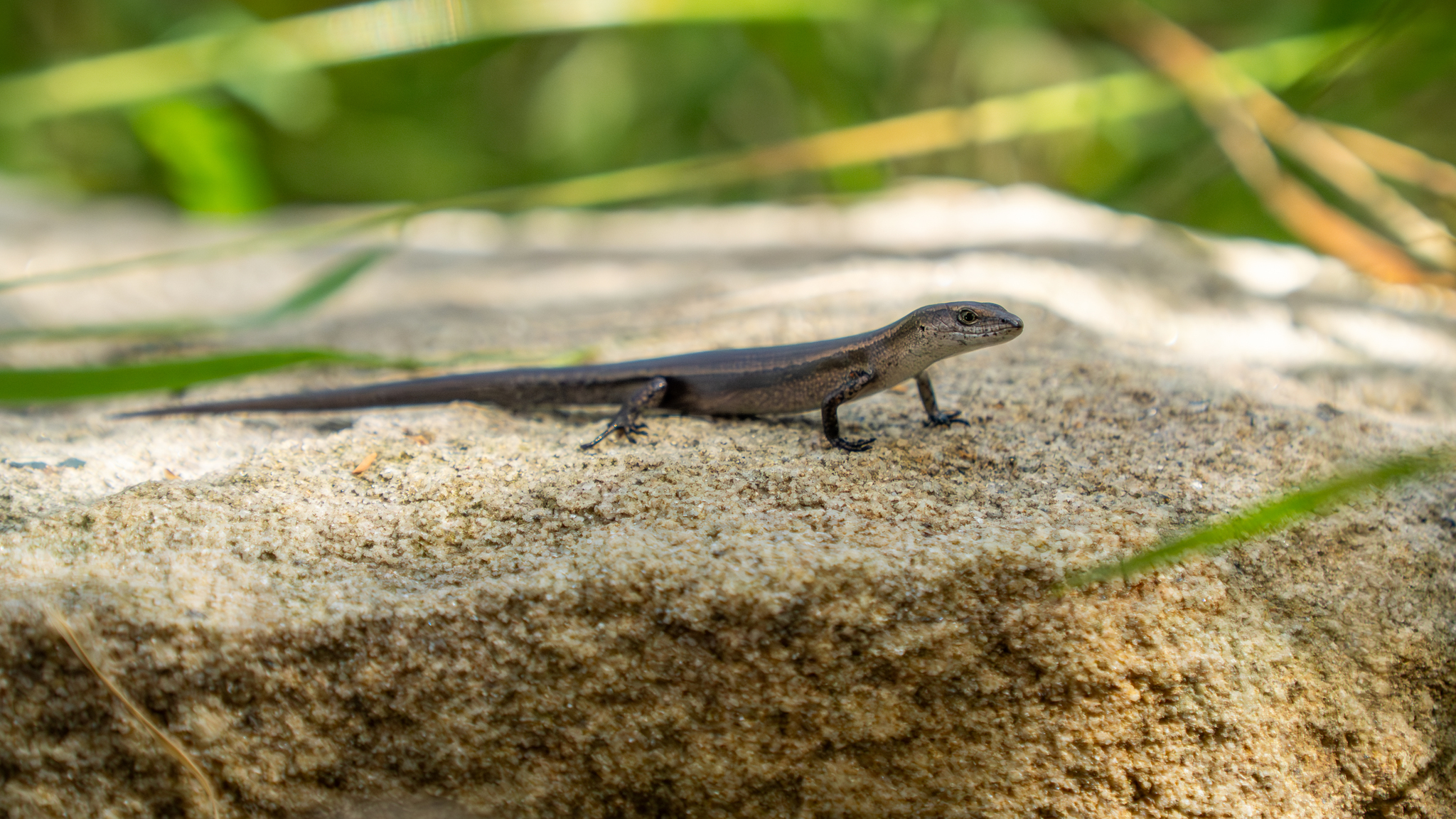
A good egg: How Aussie skinks can survive challenging hatching conditions

Publicly released:
Australia; NSW; SA; ACT
Photo by Austen Armstrong via iNaturalist (CC-BY-4.0 https://creativecommons.org/licenses/by/4.0/)

Australian lizards are more likely to survive and thrive after hatching if they came from a big egg, according to Australian researchers who were testing the impact of outside stressors on hatching success in two lizards; the common garden skink and Lampropholis delicata - known as the rainbow or delicate skink. The researchers applied stress hormones directly to some lizard eggs and exposed some to heat. They say the stress hormones only impacted hatching success for rainbow skinks, which produce larger numbers of smaller eggs. Both heat exposure and stress hormones reduced the likely hatching size in both lizards, the researchers say, and across the board it appeared that larger eggs were more likely to withstand difficult environmental conditions.

News release

From: The Royal Society

Life-history strategy mediates the effects of multiple developmental stressors on Australian lizards

Animals are exposed to multiple environmental conditions during development, which can each affect traits like survival and size early in life. Here, we tested how simultaneous exposure to stress hormones and different temperatures affected the survival of eggs and body size at hatching of two lizard species. Stress hormones and warm temperatures both lead to higher egg mortality and smaller body sizes in both lizards, but bigger eggs were less affected than smaller eggs. Our findings indicate multiple developmental environments can simultaneously reduce survival and size, but mothers can mitigate these effects by making bigger eggs.

Attachments

Note: Not all attachments are visible to the general public. Research URLs will go live after the embargo ends.

Research The Royal Society, Web page The URL will go live after the embargo ends
Journal/
conference:
Proceedings of the Royal Society B
Research:Paper
Organisation/s: The Australian National University, Flinders University, University of Wollongong
Funder: Funding for this project was provided by an Australian Research Council Discovery Project grant (DP210101152) awarded to DWAN and CRF and by an Australian National University fellowship awarded to DCL.
Media Contact/s
Contact details are only visible to registered journalists.