 Sign In



 Australia; NSW
Media release
From:
Scientists at Children’s Medical Research Institute (CMRI) have made a major discovery about cancer cells. This new understanding could help make chemotherapy work better, reduce side effects, and lead to the development of new cancer treatments.
The research, published today in Nature Communications, focuses on how cancer cells keep their chromosomes intact so they can continue dividing relentlessly. Normally, every time a cell divides, the ends of its chromosomes—called telomeres—get a little shorter. When telomeres become too short, healthy cells stop dividing. But cancer cells find ways to maintain their telomeres so they can become effectively “immortal.”
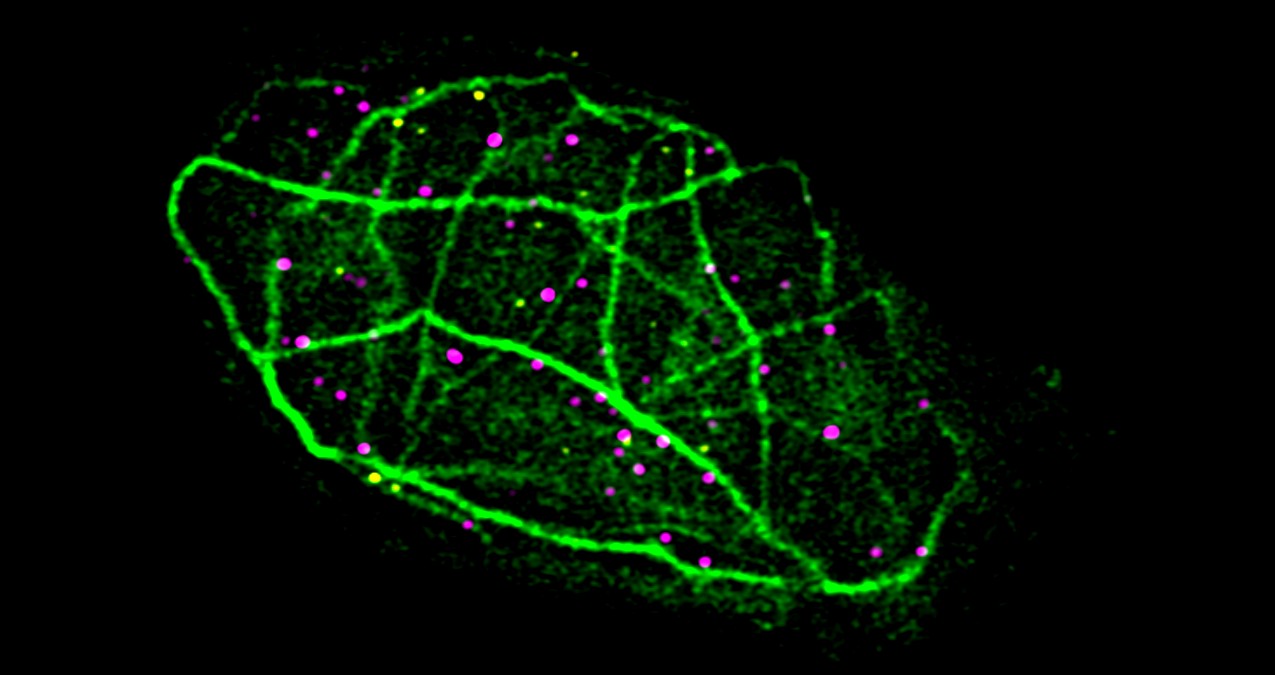
Most cancer cells use an enzyme called telomerase to rebuild their telomeres. In this study, Dr Ashley Harman from CMRI’s Cell Biology Unit discovered that a network of tiny fibres inside the cancer cell’s nucleus, made of a protein called actin, helps the telomerase enzyme reach the telomeres that need repair.
Professor Tracy Bryan, who leads the Cell Biology Unit, said this is an important new role for actin. Outside the nucleus, actin is already well known for helping muscles contract and helping cells move. But this newly identified function takes place inside the nucleus.
“When telomeres are damaged, they normally move around a lot,” Professor Bryan explained. “But they get caught on this actin network—like an insect stuck in a spider web. This makes it easier for telomerase to find and repair them, helping the cancer cell stay alive.”
This discovery also explains how cancer cells survive the DNA damage caused by chemotherapy. Chemotherapy is designed to kill cancer cells by damaging their DNA. But the study shows that cancer cells can use telomerase, along with this actin network, to repair some of that damage and keep multiplying.
According to Professor Bryan, this opens up promising new treatment possibilities.
“If we can block telomerase or disrupt this actin network, we could make chemotherapy much more effective,” she said. “This could also mean patients might need lower doses of chemotherapy, which would reduce harmful side effects.”
The research was carried out by Ashley Harman, Melissa Kartawinata, Nohad Maroun, Darren Nguyen, Shabita Rahman, Kevin Winardi, Scott Cohen, Tony Cesare, Noa Lamm, and Tracy Bryan at CMRI.
The work was supported by the Australian Research Council, Perpetual Foundation, Ernest & Piroska Major Foundation, Cancer Council NSW, the Arcus Foundation, the Profield Foundation, and the Neil and Norma Hill Foundation.

