Sign In



 Australia; SA
News release
From:
With plastic pollution reaching hazardous levels around the world, concern is rising about the purity and safety of drinking water.
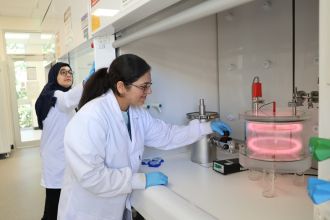
Researchers at Flinders University are working on a novel way to identify and potentially filter tiny plastic particles from water, using a novel filtration system.
Their latest proof-of-concept study, recently published in the journal Analytica Chimica Acta, unveils a new method capable of detecting nanoplastics using plasma polymer-coated filters.
Invisible to the naked eye, nanoplastics are particles produced by the breakdown of larger plastic waste. These small plastic particles range in size from approximately 1 micron down to several nanometres in diameter – making identification, location and filtering a complex problem in water, soil and the air.
Senior co-author, Flinders Associate Professor Melanie MacGregor, says there are huge gaps in our understanding of nanoplastics presence and accumulation in water, given the difficulty in finding and separating such minute particles.
First author of the study, Manpreet (‘Preet’) Kaur, a PhD Candidate at the Nano and Microplastics Research Consortium at Flinders University, says there is no standard or validated method for detection and quantification specifically for nanoplastics in drinking water and other liquids.
“While effective filter materials and methods have been developed for microplastic isolation (larger particles up to 5mm in size), accessible and cheap to implement solutions often fall short in successfully capturing the smaller size fractions,” says Ms Kaur, from the College of Science and Engineering at Flinders University.
“This may require advanced instruments, high pressure or complex systems which may be inconsistent,” she says.
“However, our work with plasma polymer coated filters shows we can capture and quantify nanoplastics in various water samples, enabling precise insights into levels of contaminants.
"While detection methods exist, the results can be misleading if you don't know what you've actually isolated.
“We are working on developing ways to measure nanoplastics levels accurately, so then exposure or risk can be studied, for possible harmful effects on health and the environment.”
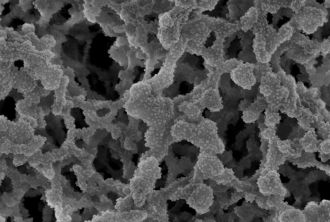
The novel technique uses specifically engineered plasma polymer coatings as a selective surface to capture nanoplastic particles, based on their affinity towards the developed coatings.
The researchers claim that they can considerably decrease the uncertainty that has impacted previous measurements by separating nanoplastics prior to analysis.
Flinders post-doctoral researcher Dr Iliana Delcheva, the third author of the study, says the presence of nanoplastics derived from multiple polymer types in a single water sample significantly heightens the challenge of identifying and separating them.
“After particle isolation, we use thermogravimetric analysis to reveal the degradation behaviour of materials when heated. This technique can be used to confirm if the material that has been isolated is plastic, as plastics exhibit distinct thermal responses,” says Dr Delcheva.
Read more – ‘Affinity capture of nanoplastics and their thermogravimetric quantification on plasma polymer coated filters’ (2025) by Manpreet Kaur, Iliana Delcheva and Melanie MacGregor in Analytica Chimica Acta DOI: 10.1016/j.aca.2025.345008.
Multimedia